
Uncategorized
Postpartum Soup Delivery for Better Rest Days
Sep
The first days after birth can make even a simple lunch feel like a major task. You may be healing, feeding around the clock, managing visitors, and learning your baby’s rhythms all at once. Postpartum soup delivery gives you one dependable source of warmth and nourishment when cooking, grocery shopping, and deciding what to eat are the last things you should need to manage.
For many mothers in Singapore, soup is more than a comforting side dish during confinement. A thoughtfully prepared bowl can be an easy, gentle way to include protein, vegetables, fluids, and traditional ingredients in a meal that arrives warm and ready to enjoy. The right delivery service does not replace your doctor’s advice or individual dietary needs, but it can make daily nourishment far more manageable while you focus on rest and bonding.
Why warm soup matters after birth
In Traditional Chinese Medicine-informed postpartum care, the weeks after delivery are viewed as a time to replenish and restore. Meals are often chosen for warmth, digestibility, and ingredients traditionally enjoyed to support a mother’s strength during confinement. Soups fit naturally into this approach because they are comforting, hydrating, and easy to pair with a complete meal.
Modern nutrition matters, too. After vaginal birth or a Caesarean birth, mothers need regular meals with enough energy, protein, iron-rich foods, fiber, and fluids. Your needs can vary depending on your recovery, appetite, blood loss, breastfeeding, medical history, and any guidance from your care team. Soup alone is rarely the whole answer, which is why a well-planned confinement menu should include satisfying mains, vegetables, grains, and nourishing snacks alongside its herbal broths.
A good postpartum soup should feel enjoyable, not like something you have to force yourself to finish. Some days you may crave a familiar ginger-forward chicken soup. On others, a lighter fish broth or a slow-simmered herbal soup may be more appealing. Variety helps you continue eating well across several demanding weeks.
What postpartum soup delivery takes off your plate
The practical benefit is simple: food arrives when you need it, without another round of planning. But for a new mother, that convenience can carry real emotional relief. It means one less question for your partner to answer, one less item on a family member’s shopping list, and one less reason to stand in the kitchen when your body is asking for rest.
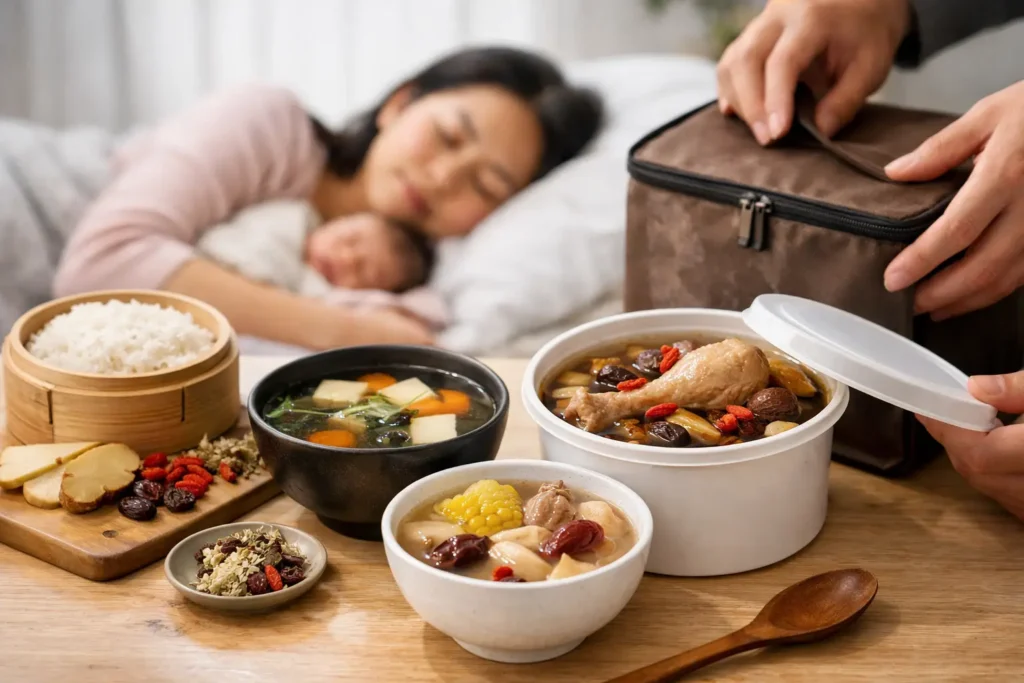
Warm delivery matters particularly during confinement. Reheating meals can be inconvenient when you are holding a sleeping baby, recovering from surgery, or settling into a feeding routine. Meals delivered warm in reusable thermal tingkat sets are ready when you are, while also making it easier to enjoy several dishes together rather than relying on a single container of soup.
A structured 7-, 14-, or 28-day meal program can also bring welcome rhythm to an unpredictable time. You do not have to commit to a long plan before you know what suits you. A trial meal is a sensible way to experience the portion size, flavors, delivery timing, and overall service before arranging more support.
Choosing a postpartum soup delivery service in Singapore
Not every soup labeled “confinement food” is planned with the same care. Look beyond a menu filled with traditional names and consider how the meals will support your day-to-day recovery.
A dependable service should offer:
- Freshly prepared meals that arrive warm and on schedule
- Menus developed with informed input from culinary, nutrition, TCM, and lactation professionals
- A balance of therapeutic herbal soups and complete meals with protein and vegetables
- Enough menu variety to make a multiweek plan enjoyable
- Clear options for dietary preferences, allergies, and recovery-related needs
The best fit also depends on your household. If you have family members cooking for you, soup delivery may supplement what they prepare and reduce the work involved. If you do not have full-time confinement help, a more complete meal plan may be the more reassuring choice. Mothers recovering from a Caesarean birth may especially appreciate not having to lift cookware, stand for long periods, or coordinate multiple meals each day.
Before ordering, tell the provider about any food allergies, dietary restrictions, medical conditions, or ingredients you prefer to avoid. If you are breastfeeding, a lactation professional can help you sort through individual concerns. There is no one “perfect” soup for every mother, and care is most useful when it respects your body, culture, and appetite.
TCM-informed nourishment can still be food you look forward to
Confinement meals have sometimes been treated as repetitive, restrictive, or purely medicinal. Mothers deserve better than that. Traditional nourishment can be prepared with purpose while still offering color, texture, and flavors that make mealtimes feel like a pleasure.
At Shan Food, menus are guided by a chef with 30 years of experience, a TCM professor, a clinical nutritionist, and lactation professionals. That combination helps bring thoughtful balance to every day of a program: traditional herbal soups and ingredients alongside modern Chinese, Japanese, Korean, Thai, and Western-inspired dishes.
This variety is not simply about having more choices. When meals are satisfying, mothers are more likely to eat consistently through the long days and nights of early parenthood. A fragrant soup with fresh fish, a nourishing chicken dish, tender vegetables, and comforting grains can feel both familiar and thoughtfully prepared for the stage you are in.
Some mothers also enjoy adding items such as bird’s nest, Thai young coconut water, or fresh fish to their nourishment plan. These choices should complement your preferences and needs rather than create pressure to follow someone else’s confinement rules exactly. Your recovery deserves personal care, not a rigid checklist.
Planning your first week of support
If your due date is approaching, arranging meals before birth can prevent a stressful decision later. Consider your expected delivery window, the people who may be helping at home, and how much coverage would feel meaningful. A shorter plan may suit a mother who wants to try the service or has strong family support. A 28-day program can provide more continuity for households that want dependable nourishment throughout confinement.
It is also helpful to plan for the reality that birth rarely follows a perfect schedule. Choose a provider that communicates clearly and can guide you through start dates, delivery arrangements, and meal preferences. Your partner or family member can handle the order, but the meals should still reflect what you will genuinely enjoy eating.
Keep a few simple questions in mind: Will meals arrive warm? Are soups paired with complete dishes? Is there enough variety for several weeks? Can the team help you choose a plan for vaginal or Caesarean recovery? Clear answers create confidence before your baby arrives.
A warm meal is a form of practical care
You have spent months caring for your baby. Once your baby is here, you deserve care that is just as steady. Postpartum nourishment is not about meeting an impossible standard of recovery. It is about making sure there is a warm, balanced meal waiting for you while you heal at your own pace.
If you are preparing for confinement, consider starting with a trial meal or speaking with a maternal nourishment team about the support that fits your household. Let someone else take care of the soup, so you can keep your energy for resting, feeding, and getting to know your baby.