


Uncategorized
Trial Meals Versus Meal Plans for New Mothers
Sep
The first days after birth rarely leave room for deciding what to cook. You may be managing soreness, feeding schedules, visitors, sleep in short stretches, and a baby who needs you just as you are learning what you need yourself. When considering trial meals versus meal plans, the right choice is not simply about how many days of food to order. It is about how much structure, reassurance, and practical care will serve you during recovery.
A trial meal lets you experience the food and service before committing. A structured postpartum meal plan gives you dependable nourishment across the period when planning, shopping, and cooking can feel like one responsibility too many. Both have a place. Your recovery needs, support at home, delivery timing, and preferences around flavor and variety can help you decide.
What a trial meal can tell you
A confinement trial meal is a thoughtful first step for mothers who want to understand what modern TCM-informed nourishment tastes and feels like in real life. Reading a menu can tell you whether it includes ingredients associated with postpartum care, but it cannot tell you whether the soup arrives warm, whether the portions feel satisfying, or whether the dishes are ones you will genuinely look forward to after a long night.
A well-planned trial meal gives you that firsthand experience. You can assess the freshness of the ingredients, the balance of flavors, and the variety within the set. You may discover that ginger-scented fish, slow-simmered herbal soup, nourishing grains, and cooked vegetables feel comforting rather than restrictive. Or you may find that you prefer familiar Japanese, Korean, Thai, or Western-inspired dishes alongside traditional Chinese recovery foods.
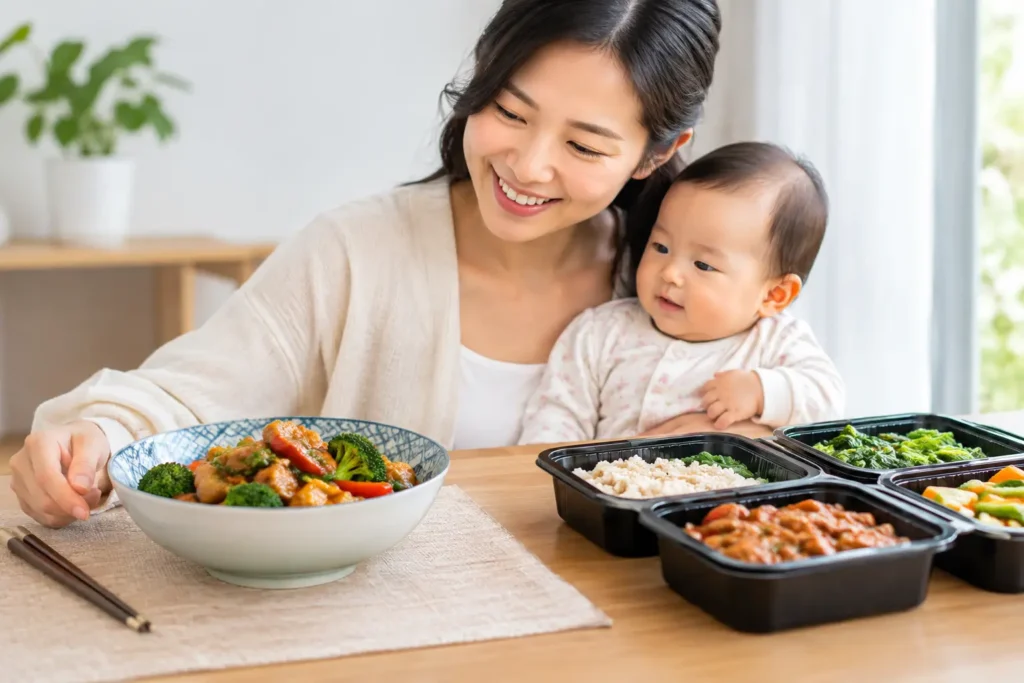
It is also a practical way to see whether the delivery routine suits your household. Warm meals delivered in reusable thermal tingkat sets can make a meaningful difference when you are resting with your baby and do not want to transfer food, wash multiple containers, or coordinate another task at the door.
For husbands and family members arranging postpartum support, a trial can provide confidence too. It replaces assumptions with a simple question: does this meal make the mother feel cared for, well-fed, and relieved?
When a trial meal is the better choice
A trial meal is especially useful if you are ordering from a confinement food delivery service for the first time, have particular taste preferences, or are still deciding how much help you will have after delivery. It can also work well during pregnancy, when you have more energy to consider options and would like to sample the menu before your due date.
It is not a test of whether you can “handle” a full plan. Some mothers need flexibility because family is cooking, a helper is available, or they are moving between homes. Others simply want one nourishing meal on a difficult day. That is a valid use of a trial.
Still, a single meal offers only a snapshot. It cannot fully show the relief that comes from waking up for two or four weeks knowing lunch and dinner are already taken care of.
Trial meals versus meal plans: the difference is continuity
Postpartum nourishment is most supportive when it is consistent. Traditional Chinese dietary principles often focus on serving warm, cooked foods and carefully selected ingredients during confinement, while modern nutrition considers adequate protein, vegetables, whole grains, hydration, and energy needs. Neither approach needs to mean eating the same dish every day or following rigid food rules without regard for your appetite and medical guidance.
A 7-, 14-, or 28-day meal plan brings those considerations together in a routine. Instead of trying to build balanced plates while recovering, you receive meals planned with purpose over time. This is where a structured program can feel less like food delivery and more like dependable maternal care.
At Shan Food, menus are developed with input from an experienced chef, a TCM professor, a clinical nutritionist, and lactation professionals. That multidisciplinary approach matters because postpartum needs are personal. A mother recovering after a vaginal birth may need a different level of practical support than a mother recovering from a C-section, while breastfeeding mothers may be especially conscious of regular, satisfying meals and hydration.
No meal plan can replace advice from your doctor, especially where allergies, medical conditions, complications, or prescribed dietary restrictions are involved. But a considered plan can remove the daily mental load of asking, “What am I supposed to eat now?”
What a meal plan gives you beyond more meals
The value of a meal plan is not only the number of deliveries. It is the rhythm it creates. Regular warm meals can help anchor a day that otherwise feels unpredictable. When your partner returns to work, family help changes, or feeding takes longer than expected, you still have nourishing food ready.
Longer programs also allow for more menu variety. This matters more than it may seem. Confinement food should be comforting, but it should not become monotonous by day five. Rotating Chinese recovery classics with modern dishes can help mothers enjoy their meals while still prioritizing ingredients selected for the postpartum period.
For many households in Singapore, a meal plan also reduces invisible work. Someone no longer needs to plan groceries, source fresh fish, prepare herbal soups, clean the kitchen, or decide whether takeout is suitable for recovery. That time can go toward rest, bonding, or simply sitting down to eat while the food is still warm.
Choosing between 7, 14, and 28 days
The best plan length depends on your home support and how much of your recovery you want covered. A 7-day program can be a gentle starting point if relatives are helping for part of your confinement period or if you want a more structured transition after leaving the hospital. It offers immediate support without requiring a longer commitment.
A 14-day plan often suits mothers who want meaningful continuity through the early adjustment period. By the second week, the novelty of having a newborn may have worn off, but the physical demands have not. Having meals arranged can be particularly reassuring then.
A 28-day program is for families who want comprehensive confinement support. It is a practical choice when there is no full-time helper, when a partner is balancing work and newborn care, or when the mother wants to protect more time for rest. For C-section recovery, dependable meals may feel especially valuable when standing, lifting, and cooking are uncomfortable in the early weeks.
There is no prize for choosing the longest plan. If your family has reliable cooking support and you only need coverage for the first week, a shorter program may be right. If you know that support will be limited, choosing more days in advance can spare you from making food decisions when you are already depleted.
Questions to ask before you order
Before selecting a trial or a program, consider what will make your everyday life easier. Ask whether meals are prepared fresh and delivered warm, whether the menu has enough variety for multiple weeks, and whether portions are designed to be satisfying. Check how the provider handles delivery, containers, dietary preferences, and communication when you need help.
It is worth looking beyond labels such as “confinement food.” You deserve to know who plans the meals and why certain ingredients are included. A nourishing postpartum menu should feel thoughtfully composed, not like a generic set of dishes with a few herbs added.
Also consider what you enjoy eating. Recovery food is still food, and pleasure matters. A menu that includes comforting soups, fresh fish, tender proteins, cooked vegetables, and flavors you recognize is easier to sustain than one that feels like an obligation. If you are breastfeeding, keep water accessible throughout the day and speak with your care team about individual nutrition needs rather than relying on blanket claims about any one ingredient.
Let your support needs guide the decision
Choose a trial meal when you want to taste the care, check the quality, and make a confident decision before your postpartum dates begin. Choose a meal plan when what you need most is not another choice, but the quiet relief of knowing your nourishment is arranged.
You have spent months caring for your baby. As you prepare for birth or settle into recovery, give yourself permission to make meals one less thing to manage. Order a trial when you want reassurance, or arrange a program when you are ready to protect more space for healing, resting, and bonding with your baby.
FREE FOR MUMS
Eat well through your confinement
The HMC app guides you through your first 40 days after birth with daily nutrition, recovery and lactation tips, plus easy booking for classes and workshops.
Get the free HMC app →