

Uncategorized
Herbal Soup After Childbirth: What Helps?
Aug
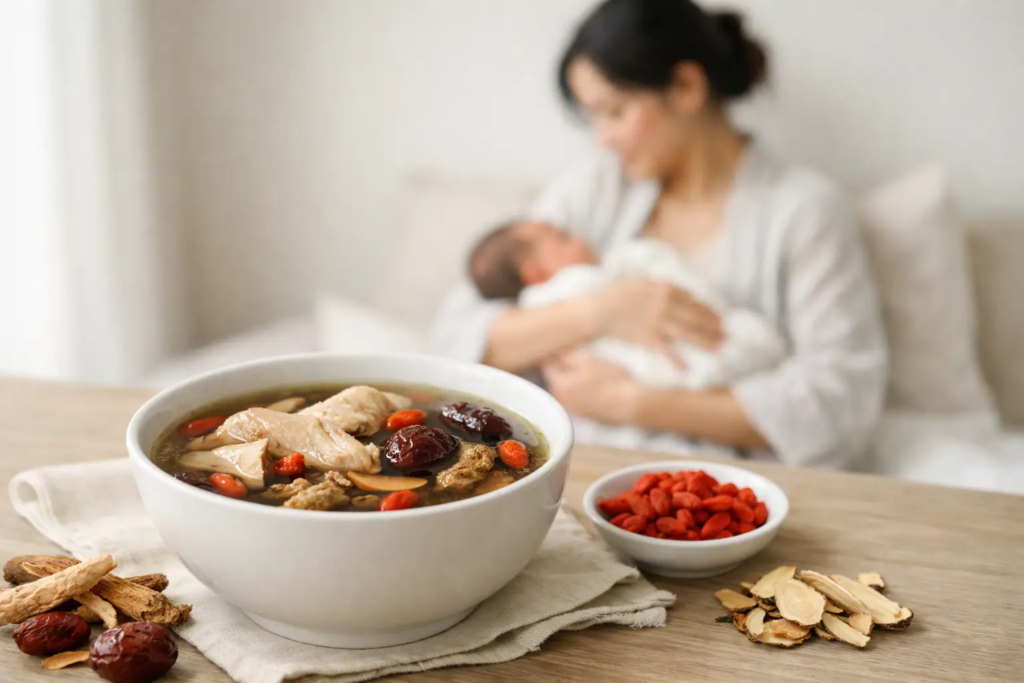
The first days after birth can leave you hungry, tired, tender, and unsure what your body needs most. A warm bowl of herbal soup after childbirth can be one gentle part of your confinement meals: comforting, easy to enjoy, and thoughtfully prepared around your stage of recovery.
In Traditional Chinese Medicine, postpartum food is often chosen to support warmth, circulation, rest, and gradual rebuilding after pregnancy and delivery. But there is no single soup that suits every mother. Your delivery, appetite, breastfeeding plans, incision healing, and personal constitution all matter.
Why Herbal Soup Can Feel So Supportive After Birth
Soup offers something especially practical when rest is your priority. It is warm, soft, hydrating, and easy to eat even when you are caring for a newborn with one hand. A well-planned bowl can also bring together protein, vegetables, and traditional ingredients without feeling heavy or repetitive.
For many mothers in Singapore, confinement soups are a familiar expression of care. Ginger-infused chicken soup, fish soup with papaya, and slow-simmered soups with red dates or dried longan are often served because they feel warming and nourishing. The value is not only in the ingredients. It is also in having a dependable meal arrive when planning, shopping, and standing over the stove are the last things you need.
Still, herbal soups are best seen as part of a balanced postpartum diet, not a cure-all. Recovery also depends on adequate rest, regular meals, hydration, medical follow-up, and support at home.
Choosing Herbal Soup After Childbirth by Recovery Stage
Your needs can shift quickly through confinement. The soup that feels right in the first week may not be the one you want later, once your appetite returns and you are moving around more comfortably.
The first week: warm, gentle, and easy to digest
Immediately after delivery, many mothers prefer lighter soups with familiar ingredients. Chicken or lean pork can provide satisfying protein, while vegetables and warming aromatics such as ginger add flavor without making the meal feel overly rich.
In TCM-informed meal planning, this early phase is often approached gently. Soups may feature ingredients traditionally used to complement warming meals, such as old ginger, red dates, dried longan, or a small amount of black fungus. The exact combination should be considered carefully, especially if you have a sensitive stomach, significant blood loss, high blood pressure, food allergies, or specific instructions from your obstetrician.
If you have had a Caesarean birth, comfort matters even more. Choose soups that are easy to manage while you are sore and resting. A nourishing soup can be helpful, but it should sit alongside the medical guidance you have been given for incision care, pain management, bowel regularity, and activity.
Weeks two and three: more variety and satisfying protein
As your appetite and energy begin to settle, you may enjoy fuller soups with fish, chicken, pork, tofu, mushrooms, leafy greens, or root vegetables. This is also when variety becomes important. Eating the same taste profile every day can make confinement food feel like another chore.
Traditional ingredients such as goji berries, red dates, Chinese yam, lotus root, and black beans are often incorporated into postpartum soups for depth of flavor and their place in TCM food traditions. A thoughtful menu balances these ingredients with everyday nutrition rather than relying on herbs alone.
For breastfeeding mothers, regular, satisfying meals and enough fluids are often more useful than chasing one “milk-boosting” ingredient. Some mothers enjoy papaya fish soup or a mild chicken soup with ingredients commonly included in lactation-friendly meals. Results vary from person to person, so focus on meals that you can eat consistently, enjoy, and tolerate well.
Later confinement: nourishment that still feels like real food
By the later weeks, mothers often want meals that feel less restrictive while still supporting a restful routine. Herbal soups can become more flavorful and substantial, with dishes inspired by Chinese, Japanese, Korean, Thai, or Western cooking.
This is where modern confinement food makes a real difference. You should not have to choose between a traditional chicken herbal soup and a fresh fish soup with bright vegetables just because you are recovering. Both can have a place in a varied plan, depending on how you feel that day.
Ingredients to Ask About
A good confinement soup should be transparent about what is in it and why. You do not need to memorize every herb, but you deserve to know whether a soup is mild and warming, protein-focused, or built around a more traditional herbal blend.
Ginger is a common postpartum ingredient because of its warming flavor, though the amount should suit your comfort level. Red dates and dried longan add natural sweetness, while goji berries are often used in soups for color and a gentle fruity note. Chinese yam, lotus root, mushrooms, black beans, and leafy greens can add texture and everyday nutrition.
More concentrated herbs need greater care. Ingredients such as dang gui, ginseng, or certain proprietary herbal blends may not be appropriate for every mother, every recovery stage, or every medication plan. If you are breastfeeding, managing a health condition, or taking prescribed medication, ask your doctor, TCM physician, or qualified care team before adding medicinal herbs to your routine.
The same care applies to cooking wine. Some confinement recipes use it for flavor, but mothers may prefer alcohol-free options, particularly when breastfeeding or when they simply do not feel comfortable including it. Clear ingredient information and practical customization help you make the choice with confidence.
What Makes a Postpartum Soup Meal-Plan Worthwhile
The best herbal soup is not necessarily the most complicated one. It is the one that arrives fresh, tastes good, suits your recovery needs, and gives you enough nourishment to get through a demanding day.
Look for meals that include a meaningful protein source, vegetables, and balanced portions rather than a broth alone. Ask how often menus rotate, whether delivery is dependable, and whether dietary preferences can be accommodated. If you are ordering for a new mother, consider the practical details too: warm delivery, easy-to-reheat containers, and portions that do not create extra work for the household.
At Shan Food, therapeutic herbal soups are planned within a broader confinement menu shaped by an experienced chef, TCM professor, clinical nutritionist, and lactation professionals. That means a mother can enjoy traditional soup alongside varied dishes without being limited to one flavor profile for weeks.
Let Soup Be One Less Thing to Think About
There may be days when you want ginger chicken soup, and days when fresh fish and vegetables sound more appealing. Listen to your appetite, follow your care provider’s advice, and give yourself permission to accept help.
You have spent months caring for your baby. Now, let your meals care for you too. A trial confinement meal can be a simple way to find the herbal soups and recovery dishes that make your postpartum days feel warmer, easier, and more supported.