
Uncategorized
When Is Postnatal Massage Safe After Birth?
Aug
Your body has done extraordinary work, whether you had a vaginal birth or a Caesarean delivery. In the first days and weeks, it is natural to want relief from tight shoulders, a sore back, tired legs, and the physical strain of feeding and carrying your baby. Postnatal massage can feel deeply comforting, but timing and technique matter. Recovery is not a race, and the right care should support rest rather than ask more of your body.
What postnatal massage is meant to support
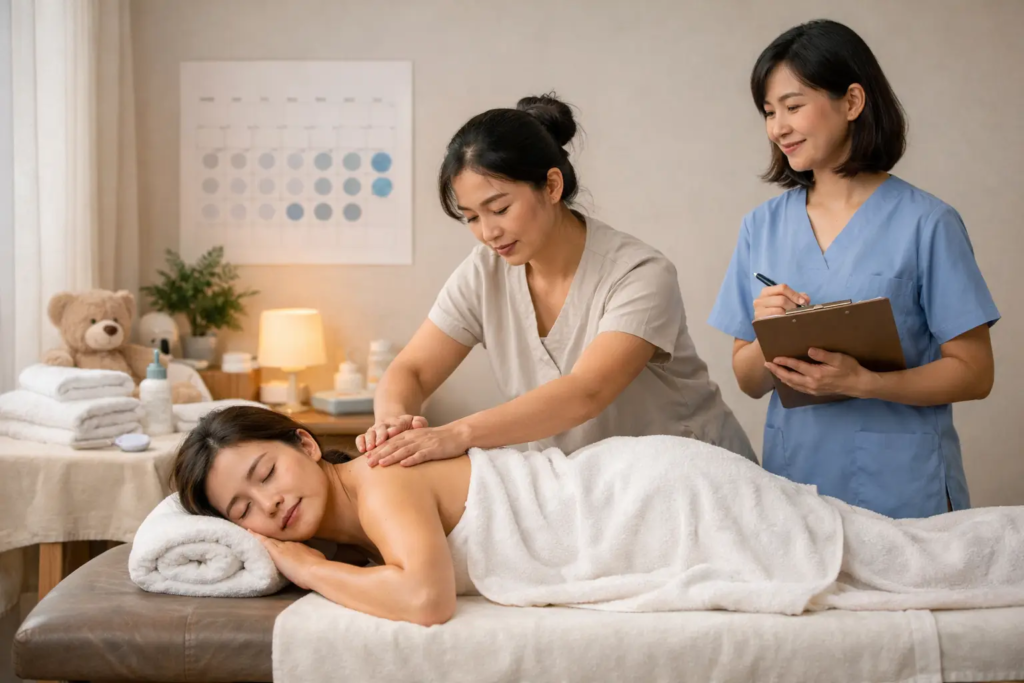
Postnatal massage is a gentle, recovery-focused massage given after childbirth. Depending on the practitioner and your preferences, it may focus on areas that commonly feel overworked after birth, including the neck, shoulders, lower back, hips, hands, feet, and legs. Some mothers also choose traditional Malay, Jamu, or TCM-inspired postpartum massage practices as part of their confinement routine.
A good session should feel calming and responsive, not intense or painful. The goal is usually everyday comfort: easing muscle tension, encouraging a sense of rest, and giving a mother a little protected time to reconnect with her changing body. It is not a substitute for medical care, and it should not be presented as a treatment for postpartum complications.
For many new mothers in Singapore, the appeal is practical as well as emotional. Hours spent nursing, expressing milk, rocking a baby, and recovering on broken sleep can leave the body feeling as though it has nowhere to soften. A qualified therapist who understands postpartum needs can adapt the session around that reality.
When can you start postnatal massage?
There is no single date that suits every mother. The safest answer depends on your delivery, your healing progress, any medical conditions, and your doctor’s or midwife’s advice.
After an uncomplicated vaginal birth, some mothers may be comfortable with a light, non-abdominal massage relatively soon, provided they feel well and have no concerning symptoms. Others prefer to wait until the first few weeks have passed. If you had stitches, significant tearing, heavy bleeding, high blood pressure concerns, infection, or a difficult delivery, ask your healthcare provider before booking.
After a Caesarean birth, patience matters even more. A C-section is major abdominal surgery. Your incision needs time to heal, and direct work over the abdomen or scar should only happen when your doctor has cleared it and a properly trained practitioner is involved. Early on, gentle work on the shoulders, arms, hands, legs, or feet may be more appropriate than a full-body session, but medical guidance should come first.
The same caution applies if you have had a history of blood clots, severe swelling, varicose vein pain, preeclampsia, or any condition that affects circulation. Massage is not automatically off limits, but it needs individual advice and an experienced provider.
Signs to pause and speak with a healthcare professional
Do not push through symptoms in the hope that a massage will settle them. Seek prompt medical advice if you have fever, worsening abdominal pain, a hot or painful breast, sudden severe headache, chest pain, shortness of breath, one-sided calf pain or swelling, heavy bleeding, foul-smelling discharge, or a wound that looks red, swollen, or is leaking.
Your postpartum checkups are a good place to discuss massage, especially if you are unsure about your incision, pelvic discomfort, blood pressure, or medication. Feeling emotionally low, anxious, or overwhelmed also deserves support. A massage can be a pleasant part of self-care, but you do not have to carry difficult feelings alone.
What a thoughtful postnatal massage session looks like
The best massage begins with questions. A therapist should ask when you gave birth, how you delivered, whether you are breastfeeding, how your incision or stitches are healing, and whether you have any medical conditions or symptoms. They should explain what they plan to do, check your comfort throughout, and welcome a clear “no” to any technique or area.
Pressure should usually be lighter than the deep tissue massage you may have enjoyed before pregnancy. Your ligaments, abdominal muscles, pelvic floor, and skin may all feel different now. If a position is uncomfortable, particularly when lying face down or on your side, it should be changed immediately. Feeding can also make the breasts tender, so many mothers prefer to nurse or express before their appointment and avoid breast massage unless it is offered by a suitably qualified professional for a specific reason.
Traditional postpartum practices can be meaningful, especially when they are part of family culture. Heat, herbal oils, tummy binding, and massage are often discussed together during confinement. Yet “traditional” does not automatically mean suitable for every body or every stage of healing. Be cautious with strong heat over a fresh incision, vigorous abdominal manipulation, and herbal products that may irritate sensitive skin. Tell your therapist if you are breastfeeding, have allergies, or are taking medication.
Rest, warmth, and nourishment work better together
Massage may offer a welcome hour of release, but recovery is shaped by what surrounds that hour. Your body also needs regular meals, fluids, sleep whenever it is possible, and help with the daily load. This is where a supported confinement routine can make a real difference: fewer decisions about cooking and less pressure to “do it all” while you heal.
From a TCM-informed perspective, postpartum care often emphasizes warm, nourishing foods and sufficient rest after the demands of childbirth. In simple terms, it is a reminder to choose meals that are comforting, balanced, and easy to receive when your energy is low. It does not mean every mother must follow the same food rules. Your appetite, cultural preferences, medical needs, and breastfeeding journey all matter.
A practical day might include a warm breakfast before a morning rest, a massage scheduled when someone else can hold the baby, and a proper lunch ready afterward. Protein-rich dishes, vegetables, soups, whole grains, and adequate fluids can help you stay nourished through the day. If you are breastfeeding, hunger and thirst may arrive suddenly. Keeping a satisfying meal within reach is often more useful than trying to prepare something from scratch while your baby naps.
At Shan Food, our structured confinement meal programs are planned with guidance from an experienced chef, a TCM professor, a clinical nutritionist, and lactation professionals. Freshly prepared warm meals bring together traditional postpartum nourishment with modern Chinese, Japanese, Korean, Thai, and Western flavors, so recovery food can remain something you genuinely look forward to. For a mother recovering from a C-section, managing a feeding schedule, or simply needing dependable support at home, a trial meal can be an easy way to see whether that care fits your routine.
Choosing a provider with confidence
Before booking, ask direct questions. Does the provider regularly work with postpartum clients? Are they trained to adapt for C-section recovery and vaginal birth healing? What information do they need before the session? Can they adjust pressure, positioning, oils, and areas of focus? A professional will not be offended by these questions. They will see them as part of safe care.
It also helps to be clear about what you want. Perhaps your shoulders ache from feeding, your legs feel heavy after days indoors, or you simply want an hour where no one asks anything of you. That information helps the therapist tailor the experience. Avoid providers who promise to “fix” your body, force it back into shape, or guarantee results such as slimming, milk supply changes, or scar healing.
If a home massage feels more manageable, plan the timing around your baby and household support. Have water nearby, wear comfortable clothing, and give yourself permission to stop early if you feel tired, tender, dizzy, or emotionally raw. You are not failing to relax if the session is shorter than expected. Your needs can change from one day to the next.
Give yourself care that feels sustainable
The early postpartum period is full of advice, traditions, and expectations. Keep what comforts you, ask questions about what does not, and let your own recovery set the pace. Postnatal massage can be a gentle addition to your care plan when it is well timed and appropriately adapted, but it is only one piece of the support you deserve.
If you are preparing for confinement or arranging care for someone you love, consider starting with a trial meal and a simple plan for rest. A warm, nourishing meal arriving when you need it can make space for the most important work of all: healing, resting, and getting to know your baby.