

Uncategorized
Pregnancy Meals for Morning Sickness That Help
Aug
Morning sickness can make a once-loved breakfast smell unbearable and turn a simple dinner decision into an exhausting task. The most helpful pregnancy meals for morning sickness are not necessarily elaborate or perfectly balanced plates. They are the foods you can tolerate, eat in small amounts, and return to throughout the day.
For many mothers, nausea is strongest in the first trimester, though it can continue beyond it. You do not need to force yourself through large meals or feel guilty when your usual healthy routine changes. This is a season for practical nourishment, gentle planning, and reducing the pressure of food decisions.
Start With Small, Steady Meals
An empty stomach can make nausea worse, which is why waiting until you are very hungry often backfires. Instead of aiming for three full meals, try eating a small snack or light meal every two to three hours while you are awake. Think of food as quiet, regular support rather than a task to complete.
A plain cracker, dry toast, a few bites of rice, or a banana before getting out of bed may be easier than facing a full breakfast. Keep something simple beside your bed if mornings are particularly difficult. Then follow with a more nourishing option when your stomach settles.
The right rhythm depends on you. Some mothers manage better with warm foods, while others find chilled fruit, yogurt, or a cold sandwich less fragrant and easier to eat. There is no prize for eating the “right” temperature. Choose what stays down and gives you enough energy to get through the day.
Gentle Pregnancy Meals for Morning Sickness
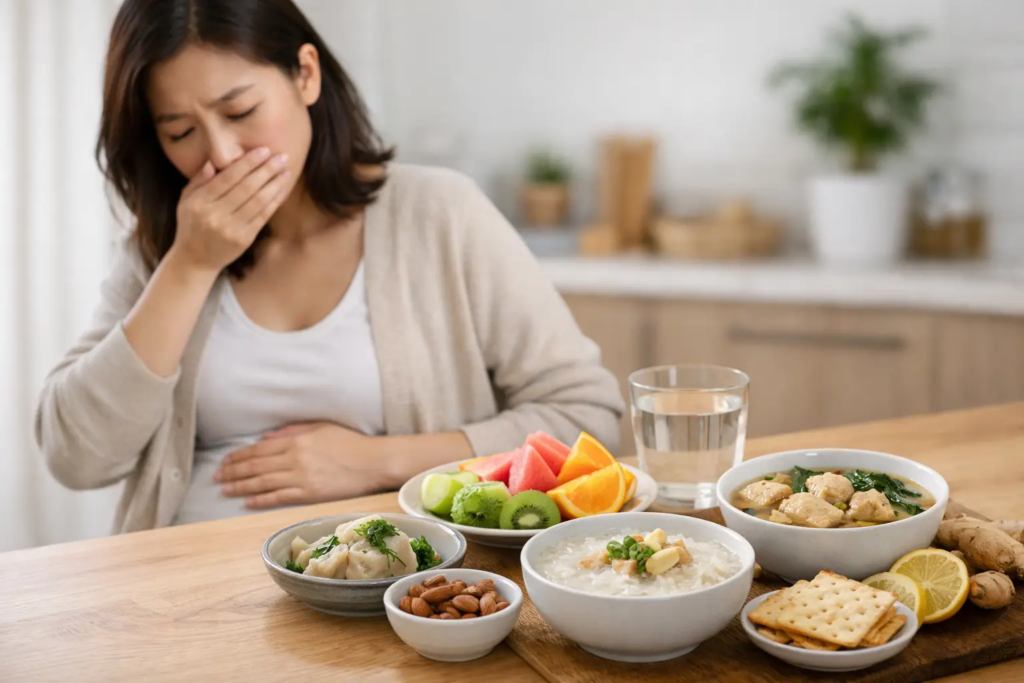
Bland does not have to mean joyless. Foods with mild flavors, soft textures, and a little protein are often easier to manage than rich, greasy, spicy, or heavily scented dishes. A simple bowl of chicken congee with ginger served on the side, for example, can offer warmth without overwhelming your senses.
Rice, noodles, potatoes, oats, and toast are dependable foundations when nausea is present. Pair them with manageable sources of protein such as egg, tofu, chicken, fish, yogurt, or nut butter, depending on what appeals to you. Even a few bites count.
When you are ready for more variety, these meal ideas can be gentle without feeling repetitive:
- Plain oatmeal with banana and a spoonful of nut butter
- Rice porridge with shredded chicken, tofu, or a softly cooked egg
- Clear noodle soup with vegetables and a mild protein
- Baked potato with yogurt, cheese, or a small serving of chicken
- Toast with scrambled egg and avocado
- Chilled fruit, yogurt, and crackers as a light afternoon plate
If vegetables are difficult right now, do not panic. Try them in smaller portions, blended into a smooth soup, folded into an omelet, or served alongside a carbohydrate you can tolerate. Your appetite may change from one day to the next, and flexibility is kinder than forcing a meal that makes nausea worse.
Warm, Simple Soups Can Be Especially Comforting
In TCM-informed food traditions, warm and lightly prepared dishes are often valued during pregnancy because they can feel soothing and easier on an unsettled appetite. A clear chicken soup, fish soup, mild vegetable broth, or simple congee may be more inviting than a heavy stir-fry.
That said, food preferences during morning sickness can be surprisingly personal. If the aroma of soup makes you nauseated, choose something cooler and plainer instead. Traditional nourishment should support your comfort, not become another rule to follow.
Make Protein Easier to Tolerate
Protein can help you feel fuller between snacks, but many mothers find meat smells particularly intense during early pregnancy. There are gentler ways to include it.
Eggs, tofu, Greek yogurt, milk, cheese, beans, nut butter, and well-cooked fish may be easier alternatives on days when chicken or beef feels impossible. Try keeping protein portions small and pairing them with familiar carbohydrates. A few crackers with cheese, toast with peanut butter, or rice with tofu can be more realistic than a large main course.
If you eat fish, choose fully cooked options and vary your choices. Your prenatal care team can offer personal guidance if you have questions about fish types, mercury, allergies, or dietary restrictions.
Reduce Food Smells Before They Take Over
Strong smells are one of the most frustrating parts of morning sickness. The scent of garlic frying, coffee brewing, or yesterday’s leftovers can trigger nausea before you have taken a bite.
Cool or room-temperature foods release less aroma than hot meals, so a chilled noodle dish, fruit, yogurt, or sandwich may be easier on difficult days. If cooking smells are a problem, open windows, use an exhaust fan, and ask a partner or family member to take over cooking when possible.
This is also where prepared meals can offer meaningful relief. When you are fatigued and nauseated, planning ingredients, shopping, cooking, and cleaning can feel like four separate hurdles. Having a dependable meal option means you can focus on eating what you can, when you can.
Hydration Counts, Even When Water Does Not Appeal
Staying hydrated may feel harder than eating, especially if large drinks make you feel overly full. Take small, frequent sips rather than trying to finish a full glass at once. Cold water, ice chips, diluted juice, clear broth, or an oral rehydration drink may be easier to tolerate for some mothers.
If plain water tastes unpleasant, try adding a slice of lemon or ginger if those flavors suit you. Some women prefer to drink between meals instead of with meals, since too much fluid at the table can make fullness and nausea worse.
Pay attention to signs that you may need medical advice. Contact your maternity care provider promptly if you cannot keep fluids down, are urinating very little or have very dark urine, feel faint, lose weight, or have nausea and vomiting that is becoming difficult to manage. Severe pregnancy sickness deserves care and support, not endurance alone.
A Practical Day of Eating When Nausea Is High
Your best day may not look like a textbook meal plan, and that is okay. A realistic pattern could begin with a few crackers before rising, followed by toast and egg later in the morning. At lunch, you might manage a small bowl of chicken congee or plain noodles with tofu.
For the afternoon, fruit with yogurt or a handful of crackers and cheese may help prevent your stomach from becoming empty. Dinner could be a mild soup with rice, or a baked potato with a simple protein. Before bed, a small snack can help some mothers wake up less nauseated.
The goal is not perfection. It is to create enough gentle opportunities to eat so that one difficult meal does not define the entire day.
Food Safety Still Matters During Pregnancy
When your appetite is limited, convenience matters, but so does food safety. Choose thoroughly cooked eggs, meat, poultry, and seafood. Use pasteurized dairy products, wash produce well, and reheat leftovers until hot. Avoid foods your maternity provider has advised against, including raw or undercooked animal products.
If you are ordering meals, look for a provider that is thoughtful about freshness, preparation, and delivery timing. Warm, ready-to-eat meals can be particularly helpful when you need nourishment but have little energy to cook.
At Shan Food, maternal nourishment is planned with guidance from an experienced chef, a TCM professor, a clinical nutritionist, and lactation professionals. The focus is not on making pregnancy feel restrictive. It is on offering thoughtfully prepared, enjoyable food that removes one more responsibility from a mother’s day.
Give Yourself Permission to Keep It Simple
Morning sickness can make food feel emotional. You may worry that you are not eating enough vegetables, not cooking enough, or not enjoying pregnancy the way you expected. Please be gentle with yourself. In many cases, this phase is temporary, and your appetite can return gradually.
For now, choose the cracker, soup, fruit, rice, or toast that feels possible. Let someone else prepare the meal if they can. Speak with your care provider when symptoms feel bigger than what you can manage. You have spent so much energy caring for your growing baby. You deserve dependable nourishment and a little more room to rest.