


Uncategorized
Postpartum Meal Delivery Versus Cooking at Home
Sep
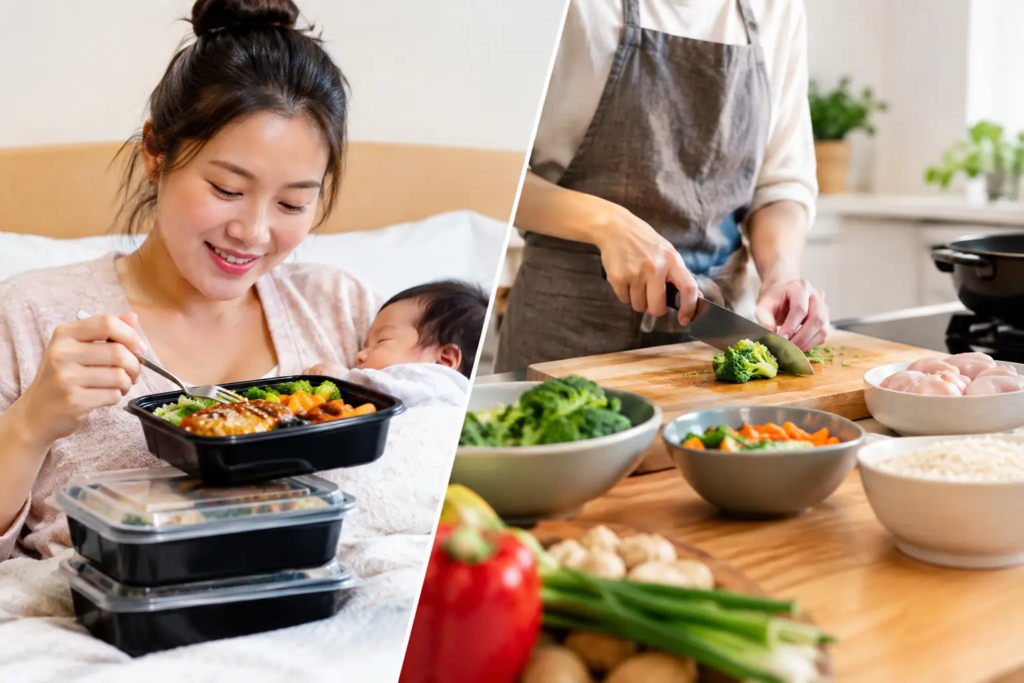
The first days after birth rarely leave room for a grocery run, much less chopping vegetables while holding a newborn. When weighing postpartum meal delivery versus cooking, the question is not whether homemade food is meaningful. It is whether you, your partner, or your family have the time and energy to make nourishing meals consistently while you heal, feed your baby, and adjust to a completely new rhythm.
You have spent months caring for your baby. Now, your nourishment deserves care too. For some families, cooking at home is a loving and practical choice. For others, a structured confinement meal delivery plan provides the dependable support that makes rest feel possible. The right option depends on your recovery, household help, preferences, and budget.
What postpartum nourishment needs to do
Postpartum meals are not simply regular meals delivered in smaller containers. During confinement, many mothers look for warm, balanced dishes that feel comforting, are easy to enjoy, and fit traditional Chinese nourishment principles. In simple terms, TCM-informed postpartum eating often emphasizes warming foods, protein-rich ingredients, cooked vegetables, soups, and ingredients traditionally included to support a mother’s strength and overall well-being after birth.
There is no single menu that suits every mother. A mother recovering from a Cesarean birth may have different needs and appetite changes than a mother after a vaginal birth. Breastfeeding mothers may also appreciate regular meals and satisfying snacks that help them stay well-fed through long days and nights. Individual medical needs, allergies, dietary restrictions, and advice from your doctor should always come first.
The practical challenge is consistency. One restorative soup is helpful, but recovery happens across many meals. A good plan removes the daily question of what to prepare, especially when sleep is fragmented and the household is busy.
Postpartum meal delivery versus cooking: the real trade-offs
Meal delivery and home cooking can both provide care. The difference is often found in the invisible work around the food: menu planning, shopping, ingredient preparation, cooking, packing, reheating, and cleaning up afterward.
Cooking at home offers familiarity and flexibility
Home cooking can be deeply personal. You can make a family recipe exactly the way you like it, control every ingredient, and adjust portions based on your appetite that day. If a parent, helper, or partner is confident with postpartum cooking and has the time to manage it, homemade meals may be a wonderful source of comfort.
It can also appear more affordable at first. Buying ingredients in bulk and cooking for the household may reduce the cost per serving, particularly when family members are already preparing meals. However, the true cost includes the time spent shopping and cooking, as well as food waste from ingredients that go unused when plans change. In the early weeks, plans change often.
Cooking becomes harder when the main cook is also the recovering mother. Standing for long periods, managing a hot stove, washing up, and deciding what to eat can feel surprisingly demanding after birth. Even with help, loved ones may not know how to plan a varied confinement menu for several weeks, or they may have work and caregiving commitments of their own.
Meal delivery provides structure when energy is limited
A postpartum meal delivery service is designed to remove the daily logistics. Meals arrive ready to eat or warm, allowing you to focus on resting, feeding your baby, and bonding as a family. This is especially valuable for first-time mothers, households without full-time confinement support, and families managing older children alongside a newborn.
The best delivery plans also bring structure to menu planning. Rather than relying on the same ginger chicken or fish soup every day, mothers can enjoy a wider rotation of proteins, vegetables, grains, and soups. Variety matters because eating well is easier when you genuinely look forward to the next meal.
At Shan Food, menus are shaped with guidance from an experienced chef, a TCM professor, a clinical nutritionist, and lactation professionals. Traditional nourishment is presented through modern Chinese, Japanese, Korean, Thai, and Western-inspired dishes, so confinement food can feel both purposeful and enjoyable. Freshly prepared meals arrive warm in reusable thermal tingkat sets, reducing another task from the day.
Delivery is not a replacement for family care. It can make that care more sustainable. A partner may still prepare fruit, refill water, and sit with you during a meal, without also needing to become the household’s full-time grocery shopper and confinement cook.
Consider your recovery, not just your ideal routine
Before birth, it is easy to picture yourself cooking a simple broth while the baby naps. Some days may look like that. Others may involve cluster feeding, visitors, unexpected appointments, incision discomfort, or a baby who only settles in your arms.
A useful decision starts with an honest look at your support system. Who will shop for ingredients? Who will cook if you are exhausted? Who will wash dishes? Will they be available every day, including weekends? If the answer is uncertain, delivery can protect your recovery from becoming dependent on someone else’s changing schedule.
Cesarean recovery deserves particular consideration. Your care team may advise you to avoid strenuous activity, and everyday kitchen tasks can be more tiring than expected. A prepared meal plan cannot replace medical guidance, but it can help you keep regular meals within reach while you prioritize rest.
If you are breastfeeding, convenience matters too. Hunger can arrive suddenly after a feed, and skipping meals because there is nothing ready is frustrating. Having warm, balanced food delivered at predictable times gives many mothers a reassuring routine during an otherwise unpredictable stage.
Is delivery always the better value?
Not necessarily. If you have reliable household help, a skilled cook, and access to ingredients that suit your preferred postpartum diet, cooking may be the more economical and personal route. Some mothers also prefer to cook certain dishes themselves while ordering only soups, lunches, or dinners.
Delivery becomes more valuable when it replaces several pressures at once: ingredient shopping, recipe research, cooking labor, cleanup, and the mental load of planning. It can also help avoid last-minute takeout choices that may not provide the warmth, balance, or variety you hoped for during confinement.
Instead of comparing only the price of groceries with the price of a meal plan, consider what dependable nourishment makes possible. More time to nap. Fewer decisions for your partner. A meal waiting after a difficult night. The value is often practical and emotional, not just financial.
A middle path can work beautifully
You do not have to choose between a fully homemade confinement month and delivery for every meal. Many families combine both. A delivery plan can cover weekday lunches and dinners, while family members prepare favorite soups or celebratory dishes on weekends. Others begin with a trial meal before committing to a longer 7-, 14-, or 28-day program.
This approach lets you see what portions, flavors, and delivery timing work for your household. It also gives relatives a clear way to contribute without placing the full responsibility for your recovery on them. They can bring fresh fruit, care for an older child, or simply make sure you have time to eat while your meal is already taken care of.
When choosing a provider, look beyond convenience. Ask how meals are prepared, whether the menu offers meaningful variety, how dietary preferences are handled, and whether delivery is reliable. Freshness and warmth matter when you are relying on a service day after day.
Let your meals make recovery feel lighter
The best choice is the one that leaves you feeling fed, supported, and less responsible for everyone else’s needs. Cooking may be right when capable help is close by and the kitchen brings comfort. Postpartum meal delivery may be the gentler answer when your energy needs to go toward healing and your baby.
If you are unsure, begin with a trial meal and notice how it changes your day. A warm meal prepared with purpose is not a luxury during recovery. It is one small, dependable way to give yourself the care you have been giving everyone else.