
Uncategorized
TCM Pregnancy Nutrition for Every Trimester
Sep
A suddenly smaller appetite, nausea that changes by the hour, fatigue that makes cooking feel impossible – pregnancy can make even simple meals feel complicated. TCM pregnancy nutrition offers a gentler way to think about food: not as a strict set of rules, but as steady nourishment that suits your body, your stage of pregnancy, and the season.
For many mothers in Singapore, this approach feels familiar. It values warm, freshly prepared meals, carefully chosen ingredients, and the belief that food should be comforting as well as nourishing. At the same time, pregnancy nutrition needs to be practical, balanced, and safe. You do not need to eat perfectly. You need meals that help you feel cared for while supporting your changing needs.
What TCM pregnancy nutrition means
Traditional Chinese Medicine, or TCM, views pregnancy as a time to conserve energy and nourish the body as it supports new life. You may hear practitioners speak about supporting qi, or vital energy, and nourishing blood and yin, concepts associated with the body’s strength, fluids, and restorative reserves.
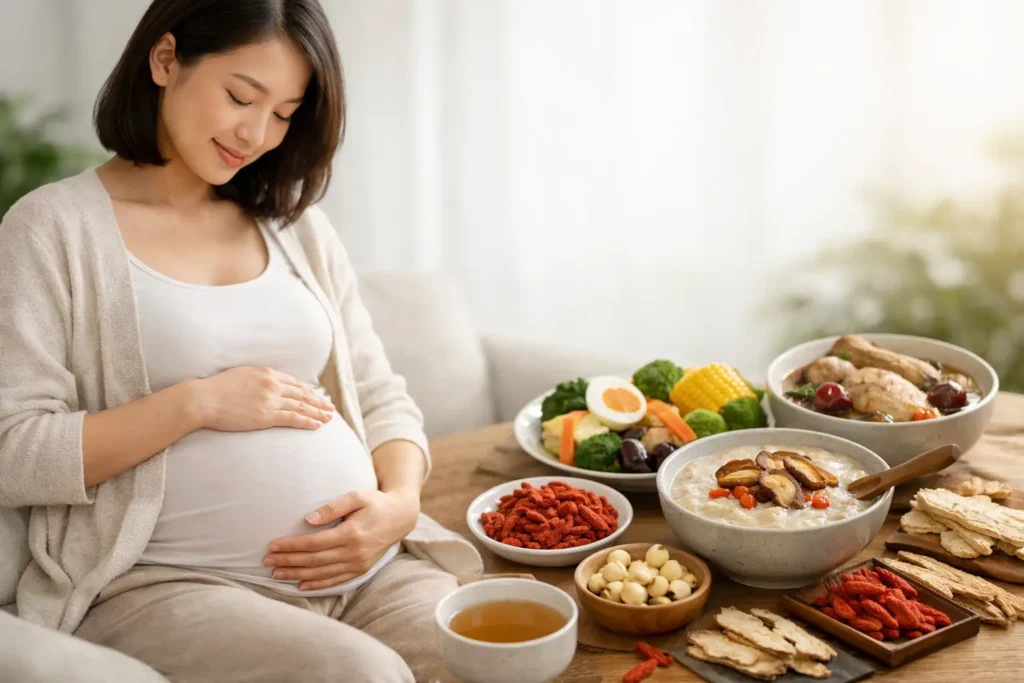
In everyday terms, that often looks like regular meals with adequate protein, vegetables, whole grains or other satisfying carbohydrates, fruit, and healthy fats. Warm soups, steamed dishes, braises, and porridge can be especially appealing when you are tired or nauseated. These foods are often easier to eat than a large cold salad or a heavily fried meal.
TCM food principles also consider an ingredient’s perceived warming or cooling nature. Ginger, chicken, red dates, and warming soups are commonly used in Chinese home cooking. Melon, pear, and some cooling drinks may be enjoyed differently depending on the individual and the weather. These descriptions are traditional food concepts, not a replacement for medical advice. A food that is comforting for one mother may not suit another, particularly if she has reflux, constipation, gestational diabetes, high blood pressure, or other pregnancy concerns.
The most helpful principle is balance. Pregnancy is not the time for extreme food restrictions, cleansing diets, or forcing yourself to eat foods that make you feel unwell.
Build meals around what your body can manage
Your nutritional priorities change across pregnancy, but dependable meal patterns matter throughout. If nausea is present, a small bowl of rice porridge with shredded chicken may feel more manageable than a full plate. If hunger returns quickly, adding an egg, tofu, fish, lean meat, or Greek yogurt can make a snack or meal more satisfying.
Rather than focusing on one “superfood,” aim for variety over the course of a week. This gives you a wider range of nutrients without creating pressure around every bite. A comforting meal may include steamed fish with ginger and vegetables, a chicken and mushroom soup with rice, or a mild beef and root vegetable stew. Familiar flavors are welcome. Nourishment should still be enjoyable.
First trimester: gentle, frequent nourishment
The first trimester can bring nausea, food aversions, bloating, and a deep kind of tiredness. This is often not the moment for large, rich meals. Smaller portions eaten more often may be easier, especially before your stomach becomes completely empty.
Plain crackers, toast, oats, bananas, rice, noodles, eggs, and mild soups can be useful starting points. If the smell of cooking turns your stomach, chilled foods may sometimes be more tolerable, even though warm meals are often preferred in TCM practice. Your ability to eat enough matters more than following a rigid temperature rule.
Ginger is traditionally used in small amounts for comfort, but concentrated ginger products or herbal remedies should be discussed with your obstetrician or maternity care team. The same applies to any TCM powder, pill, or medicinal soup prescribed outside your usual pregnancy care.
Second trimester: steady energy and iron-rich foods
Many mothers find their appetite improves in the second trimester. This can be a good time to establish a reliable rhythm of meals and snacks rather than waiting until you are overly hungry.
Protein-rich foods such as thoroughly cooked fish, poultry, eggs, tofu, beans, and lean meat help form the foundation of a satisfying meal. Iron-rich choices are also valuable during pregnancy. Lean red meat, beans, tofu, dark leafy greens, and iron-fortified grains can contribute, while vitamin C-rich fruit or vegetables can help your body absorb plant-based iron.
TCM-inspired ingredients such as black sesame, red dates, goji berries, and longan are commonly included in soups and desserts. They can be enjoyable additions to a varied diet, but they should not be treated as substitutes for prenatal vitamins, iron supplements, or individualized medical guidance when these are recommended.
Third trimester: comfort without heaviness
As your baby grows, large meals may become uncomfortable. Heartburn, constipation, and feeling full quickly are common. Smaller meals, eaten slowly, can be more comfortable than trying to finish one oversized serving.
Choose meals with protein and fiber, alongside fluids you can tolerate. A bowl of soup with vegetables, tofu, fish, or chicken can be nourishing without feeling overly heavy. Prunes, kiwi, pears, oats, vegetables, and beans may help support regularity for some mothers. If you have persistent constipation, severe heartburn, swelling, headaches, or sudden changes in appetite, speak with your healthcare provider.
Warm meals can be practical, not restrictive
A warm meal does not have to mean the same bowl of ginger chicken soup every day. Modern TCM-informed food can include Chinese, Japanese, Korean, Thai, and Western-inspired dishes prepared with pregnancy-friendly care. Variety matters because appetite changes, and because no mother should feel bored by food at a time when eating well can already take effort.
Think of warming preparation methods as one useful tool. Soups, steamed fish, stir-fries with less oil, slow-cooked meats, roasted vegetables, and warm grain bowls can all fit. On a hot Singapore afternoon, you may still want fruit, yogurt, or a lighter dish. Listen to your comfort level, while keeping food safety and nutritional balance in view.
Food safety deserves a place at the table
Pregnancy lowers the margin for foodborne illness, so the way food is handled matters as much as the ingredients themselves. TCM pregnancy nutrition should always sit alongside current medical food-safety guidance.
Avoid raw or undercooked seafood, eggs, and meat. Choose pasteurized dairy products and juices, wash produce well, and reheat leftovers until steaming hot. Be cautious with high-mercury fish, and ask your maternity care team which fish choices and serving amounts are appropriate for you.
Herbal preparations need particular care. “Natural” does not automatically mean suitable during pregnancy, and some herbs may interact with medications or be inappropriate at certain stages. If a family member recommends a traditional herbal tonic, it is reasonable to pause and ask your obstetrician or a qualified TCM practitioner who understands your pregnancy history.
When meal support becomes real support
Planning balanced food while working, managing nausea, attending appointments, or caring for older children can be exhausting. It is okay to accept help. A partner may take over groceries, a family member may prepare a soup, or you may arrange professionally prepared meals when cooking is not realistic.
The best support is dependable and flexible. Look for freshly prepared meals, clear ingredient information, thoughtful portions, and menus that offer more than one repetitive confinement-style dish. A well-planned meal service should make eating easier, not create another set of decisions.
At Shan Food, menus are developed with guidance from an experienced chef, a TCM professor, a clinical nutritionist, and lactation professionals. That combination allows traditional nourishment to be presented in meals that feel familiar, varied, and genuinely appetizing – from therapeutic herbal soups to modern Asian and Western-inspired dishes. For mothers preparing for the weeks after birth, warm delivery in reusable thermal tingkat sets can also mean one less task during a tender, demanding time.
Your pregnancy diet does not need to look like anyone else’s. Start with food you can enjoy and tolerate, keep your medical team informed about supplements and herbs, and allow practical support where you need it. You have spent months caring for your baby. Let your meals care for you, too.