


Uncategorized
28 Day Confinement Meal Plan for Recovery
Aug
Your body has carried, delivered, and begun caring for a new baby. In the first month after birth, deciding what to eat should not become another exhausting task. A thoughtfully planned 28 day confinement meal plan gives you warm, purposeful meals each day, so more of your energy can go toward resting, healing, and getting to know your baby.
For many mothers in Singapore, confinement is not simply about following a list of foods to avoid. It is a period of practical care. You may be managing soreness, fluctuating appetite, sleep deprivation, breastfeeding demands, or recovery from a Caesarean birth. Reliable nourishment cannot solve every challenge of early motherhood, but it can remove the daily pressure of shopping, preparing ingredients, and wondering whether you have eaten well.
Why 28 Days of Confinement Meals Can Make a Difference
Postpartum recovery is not a one-day event. Your needs can shift from the first tender days after delivery to the later weeks, when you may be moving more, caring for your baby around the clock, and adjusting to a new routine.
A 28-day program creates consistency during a time that rarely feels consistent. Instead of relying on whatever is quick or available, you receive regular meals designed around the traditional postpartum emphasis on warmth, replenishment, and gentle digestion. In TCM-informed confinement practice, this often means nourishing proteins, warming ginger, carefully selected herbs, cooked vegetables, and soups prepared to be comforting rather than overly heavy.
The goal is not restriction or perfection. It is to provide satisfying, balanced meals that feel appropriate for recovery and are easy to eat even on the days when you have had very little sleep.
This structure can be especially helpful for first-time mothers who are unsure what confinement food looks like, as well as families without a live-in confinement nanny. It is also meaningful support for mothers who have been through birth before and simply want better variety, fresh preparation, and dependable delivery this time around.
What a Well-Planned 28 Day Confinement Meal Plan Includes
A meaningful plan should offer more than repeated bowls of the same soup. Traditional ingredients have an important place in postpartum nourishment, but meals should still be enjoyable enough to look forward to day after day.
At Shan Food, menus are developed with guidance from an experienced chef, a TCM professor, a clinical nutritionist, and lactation professionals. That combined perspective matters. TCM principles can guide ingredient selection and meal balance, while culinary experience ensures the food remains flavorful, varied, and satisfying.
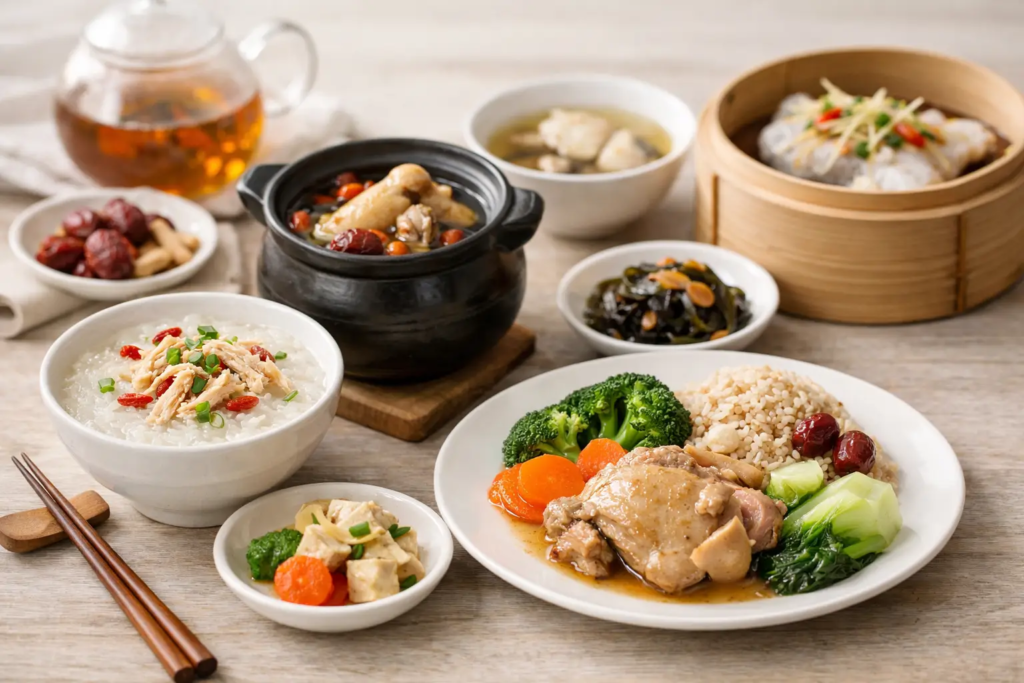
A typical day may include a generous main dish with protein, cooked vegetables, a nourishing soup, and grains or other carbohydrates for steady energy. Fish, chicken, lean meats, eggs, tofu, and legumes can all play a role, depending on the menu and your dietary preferences. Soups may feature familiar confinement ingredients such as ginger, red dates, or carefully selected herbs, prepared with attention to taste and comfort.
Variety is equally important. A month of meals should not feel like a month of compromise. Modern Chinese, Japanese, Korean, Thai, and Western-inspired dishes can sit naturally alongside traditional postpartum soups. The result is a more enjoyable rhythm of eating, with familiar comfort and different flavors throughout the week.
Warm meals, not another item on your to-do list
Freshness and timing matter when you are recovering at home with a newborn. Warm delivery means you can eat without coordinating reheating between feeds, naps, visitors, and your own need for rest. Meals delivered in reusable thermal tingkat sets also make daily care feel more organized, without adding piles of disposable containers to your household.
For a partner or family member arranging care, this reliability offers peace of mind. Instead of asking a tired mother to plan meals or manage delivery uncertainty, you can put nourishing food in place before the baby arrives.
How Confinement Needs May Change Over Four Weeks
Every mother’s recovery is personal, and your doctor’s advice should always come first. Still, a four-week plan gives space for meals to support different phases of postpartum life.
Days 1 to 7: Gentle, warming nourishment
The first week can feel physically and emotionally intense. Your appetite may be lower than expected, particularly after a long labor or surgery. Warm soups, tender proteins, soft cooked vegetables, and meals that are comforting without being greasy may feel easier to manage.
For mothers recovering from a Caesarean birth, convenience is especially valuable. Moving around the kitchen may be uncomfortable, and regular meal preparation can be difficult while you are protecting your incision and resting. A prepared confinement meal removes one daily demand without asking you to sacrifice food quality.
Days 8 to 14: Rebuilding a steady routine
As the first haze begins to lift, many mothers appreciate heartier portions and more menu variety. You may still be waking frequently, especially if you are breastfeeding or expressing milk, so regular meals and fluids remain a practical part of your day.
This is a good time for nutrient-dense dishes that include protein, vegetables, and carbohydrates rather than relying only on snacks or sweet drinks. If you are breastfeeding, your individual energy and hydration needs can be higher. Your care team can help you make choices that suit your appetite, feeding routine, and any specific dietary guidance you have received.
Days 15 to 28: Sustaining care as life gets busier
By the later weeks, the household may expect you to be “back to normal.” But recovery and adjustment continue beyond the first month. A 28-day plan protects time for rest even as appointments, baby care, and family routines begin to fill your days.
This phase is where variety makes a real difference. Pleasant, well-seasoned meals can encourage you to sit down and eat properly, rather than skipping lunch because your baby finally fell asleep. Continuing with warm, balanced food is a simple form of care when everything else feels unpredictable.
Choosing a Plan That Fits Your Recovery
The best confinement food delivery in Singapore is not necessarily the most traditional-looking menu. It is the one you can depend on, enjoy eating, and fit into your actual postpartum circumstances.
Before choosing a plan, consider your delivery area, expected delivery date, dietary needs, and whether you are recovering from a vaginal or Caesarean birth. If you have food allergies, medical conditions, gestational diabetes follow-up needs, or specific instructions from your healthcare provider, ask how the menu can work alongside that advice. A responsible meal provider should be clear about what can be accommodated and where professional medical guidance is needed.
It also helps to think about household support. If family members will be cooking regularly, a shorter program may be enough. If your partner is returning to work, your parents live elsewhere, or you simply do not want to hand over a kitchen plan to someone else, the full 28 days can provide welcome continuity.
A trial meal can be a sensible starting point if you are comparing confinement caterers. It gives you a chance to experience portion size, warmth, flavors, and delivery presentation before committing to a longer schedule. Food during confinement should feel like care, not an obligation you have to force yourself through.
More Than Food During the First Month
A good meal plan recognizes that postpartum nourishment is emotional, too. Someone preparing your meals, packing them carefully, and delivering them warm is a quiet reminder that you are being looked after. That matters when much of your attention is naturally directed toward your baby.
You do not need to earn rest by doing everything yourself. You have spent months caring for your baby. Now, let dependable nourishment care for you, one warm meal at a time.
If you are preparing for birth or arranging a meaningful gift for a new mother, consider a trial meal or a 28-day program early. Having that support ready at home can make the first month feel a little more manageable, and a lot more cared for.