
Uncategorized
What Does a Confinement Nanny Do?
Aug
The first weeks after birth can feel like one long cycle of feeding, settling, recovering and trying to rest between it all. A confinement nanny can bring valuable hands-on support to the home during this tender period, especially when family help is limited or a mother is recovering from a Caesarean birth. But it is worth understanding exactly what help she can provide, where responsibilities may differ, and how to create a support plan that genuinely gives you more space to heal.
What is a confinement nanny?
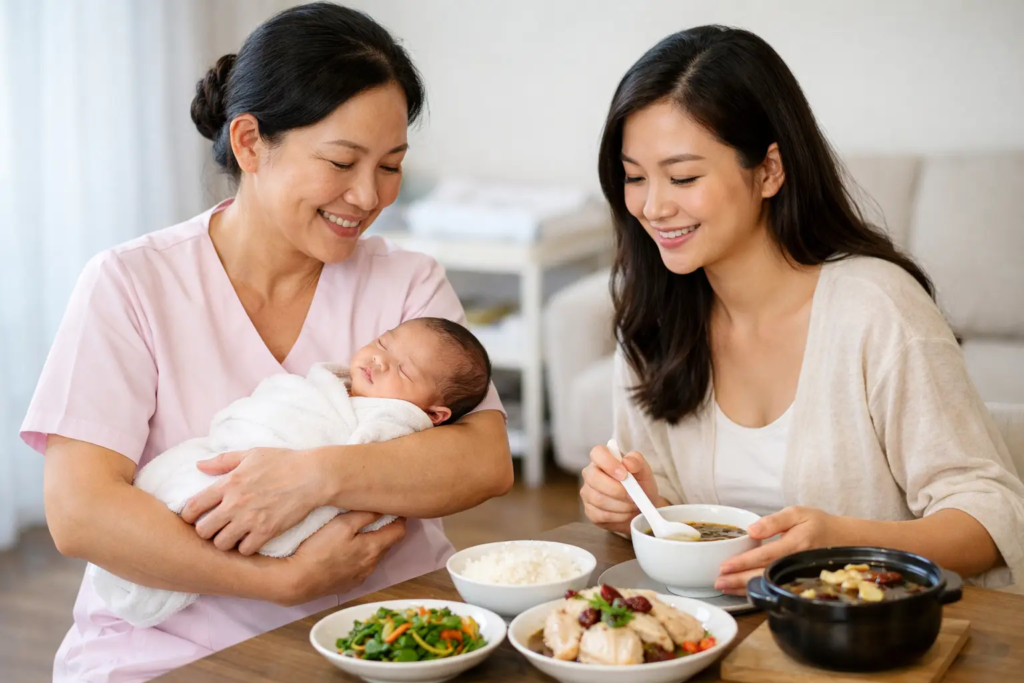
A confinement nanny, often called a confinement lady or pei yue, is a caregiver who supports a mother and newborn during the traditional postpartum confinement period. In Singapore, this period commonly lasts 28 days, although every family’s arrangement is different.
Her work usually centers on practical newborn care, household routines related to the baby and preparing or organizing food for the mother. Depending on her experience and your agreement, she may help with bathing the baby, changing diapers, washing baby laundry, night feeds, preparing herbal baths and cooking confinement meals.
The purpose is not for a new mother to follow a rigid set of rules. It is to protect her time and energy. After pregnancy and childbirth, your body is adapting, healing and, for many mothers, producing milk around the clock. Reliable help can mean more opportunities to sleep, eat warm meals and focus on bonding with your baby.
What a confinement nanny may do each day
The scope of a confinement nanny’s work varies considerably. Some live in with the family and provide around-the-clock newborn support. Others work daytime hours only. Some are experienced cooks of traditional Chinese confinement dishes, while others focus more heavily on baby care.
Before making a booking, discuss the daily routine in detail. A typical arrangement may include newborn bathing and basic care, support with night-time baby routines, washing baby clothes, simple household tidying related to mother and baby, and preparing meals designed for postpartum nourishment.
It is also helpful to clarify what is not included. A confinement nanny is not automatically a trained medical professional, lactation consultant or cleaner for the entire household. She should not replace advice from your obstetrician, pediatrician or lactation professional. Clear expectations protect both your family and the caregiver from disappointment during an already emotional time.
Support can look different after a C-section
Mothers recovering from a Caesarean birth may need more help with getting in and out of bed, lifting, climbing stairs and managing daily tasks while their incision heals. A nanny can make the days more manageable by taking care of practical baby routines and ensuring food is ready when you need it.
Still, recovery needs are personal. If you have pain, heavy bleeding, fever, concerns about your wound or overwhelming feelings, seek timely medical advice. Home support is deeply helpful, but it should sit alongside appropriate professional care.
The value of warm, planned nourishment
One of the most appreciated parts of confinement support is having food prepared without needing to think about shopping, chopping or standing at the stove. Traditional Chinese postpartum food often uses ingredients such as ginger, sesame oil, lean protein, leafy vegetables and slow-simmered soups. In TCM-informed practice, these foods are chosen to support warmth, nourishment and recovery after birth.
That said, confinement food should not mean eating the same heavy dish every day. A mother still needs adequate protein, vegetables, fiber, fluids and satisfying flavors, particularly if she is breastfeeding. Your appetite, cultural preferences, dietary needs and delivery experience all matter.
A thoughtful meal plan can include comforting soups alongside steamed fish, tender chicken, colorful vegetables, whole grains and dishes that feel familiar and enjoyable. This is where meal delivery can complement a nanny arrangement very well. Rather than asking a caregiver to shop and cook multiple meals a day, your household can receive warm, structured meals while she focuses her time on mother-and-baby support.
When a confinement nanny may not be the right fit
A nanny can be a wonderful source of care, but live-in support is not the best choice for every family. Some mothers prefer privacy at home, especially while establishing feeding routines. Others have grandparents available for baby care but need dependable postpartum meals more than another pair of hands.
Cost, home space and family dynamics matter too. An unfamiliar person staying in the home can feel stressful if expectations are not aligned. If you already feel anxious about giving instructions, struggling with sleep deprivation or managing visitors, a simpler support setup may be more restorative.
For some families, a combination works best: a part-time helper, a partner taking on baby duties, visiting family members and a confinement meal delivery service. This approach can give you practical care without requiring a live-in arrangement. There is no prize for doing confinement in one particular way. The right plan is the one that helps you feel safe, fed and supported.
Questions to ask before hiring a confinement nanny
A good interview goes beyond asking how many years someone has worked. You are inviting a caregiver into one of the most vulnerable and meaningful months of your family’s life, so it is reasonable to be specific.
Ask about her experience with newborns, including premature babies or babies with reflux if relevant to your situation. Discuss how she approaches night feeds, soothing, bathing and safe sleep. Find out whether she has supported breastfeeding mothers and how she handles a baby who is not latching well. A supportive caregiver should know when to encourage you to contact a qualified lactation professional rather than offer certainty where specialist advice is needed.
Talk honestly about food as well. Does she cook all meals? Who buys the ingredients? Can she accommodate food allergies, dietary restrictions or preferences? How many meals and snacks are included each day? If you prefer a more varied menu or do not want the home kitchen occupied for hours, say so early.
It is also wise to confirm working hours, sleeping arrangements, rest days, phone use, visitors, housekeeping boundaries and what happens if either party becomes unwell. Put the agreement in writing where possible. A clear plan feels less formal than trying to resolve assumptions when everyone is exhausted.
Building a support system beyond one person
The most sustainable postpartum care rarely rests on one person alone. Your partner may handle diaper changes and household communication. A parent or sibling may drop by with practical help. A lactation professional can guide feeding concerns. Your doctor and pediatrician remain your trusted sources for medical questions.
Food deserves its own place in that support system. When meals are already planned and delivered warm, you are less likely to skip lunch because the baby finally fell asleep, or settle for whatever is quickest in the cupboard. Consistent nourishment is one small but meaningful way to care for yourself while caring for someone else.
At Shan Food, our confinement meals are planned with guidance from an experienced chef, TCM professor, clinical nutritionist and lactation professionals. We bring together traditional recovery principles with modern Chinese, Japanese, Korean, Thai and Western-inspired dishes, so mothers can enjoy variety alongside purposeful nourishment. Freshly prepared warm meals arrive in reusable thermal tingkat sets, helping take one demanding task off the family’s list.
Give yourself permission to receive care
Whether you choose a full-time confinement nanny, family support, meal delivery or a combination of all three, let the plan reflect what you truly need. You have spent months caring for your baby before birth. In the weeks after, you deserve dependable care too.
If you are planning ahead, consider starting with a confinement meal trial and notice how it feels to have one less decision to make. A warm meal waiting at your door cannot solve every challenge of new motherhood, but it can make room for the rest, healing and quiet moments that matter.