


Uncategorized
Best Proteins for Postpartum Healing to Eat
Aug
Your body has done extraordinary work. Whether you have had a vaginal birth or a Cesarean birth, the weeks afterward call for steady nourishment that supports tissue repair, energy, and the demands of feeding and caring for a newborn. The best proteins for postpartum healing are not necessarily expensive powders or complicated recipes. They are nourishing, well-prepared foods that are easy to eat, enjoyable, and served consistently while you rest.
Protein is only one part of postpartum recovery, but it is a meaningful one. It provides amino acids, the building blocks your body uses to repair healing tissues and maintain muscle. When paired with vegetables, whole grains, warming soups, and adequate fluids, protein-rich meals can help make daily nourishment feel less like another task on your already full plate.
Why protein matters after birth
After delivery, your body is recovering from blood loss, hormonal shifts, interrupted sleep, and, for many mothers, a wound or incision. Protein supports normal tissue healing and can help make meals more satisfying, which matters when hunger appears at unpredictable times between feeds, naps, and newborn cuddles.
For breastfeeding mothers, regular balanced meals also help support overall nutritional intake during a period of increased energy needs. Protein alone does not guarantee milk supply, and there is no single food that works for every mother. Regular meals, hydration, enough calories, and professional support when feeding is difficult all matter.
Traditional Chinese postpartum nourishment often emphasizes warm, cooked dishes and soups. This can be especially comforting when your appetite is low or you are feeling chilled and tired. Modern nutrition adds another useful perspective: variety matters. Rotating fish, poultry, eggs, legumes, tofu, and other proteins helps provide a broader mix of nutrients without making every meal feel repetitive.
The best proteins for postpartum healing, explained
Fish: gentle, flavorful, and nutrient-rich
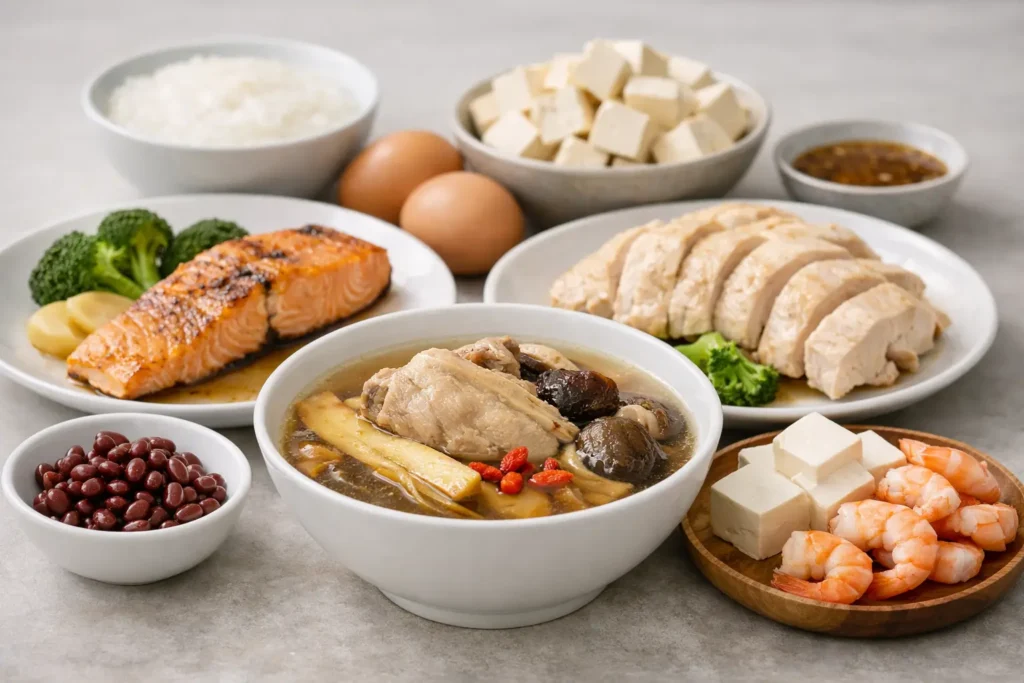
Fresh fish is a beloved choice in many confinement diets because it is tender, easy to digest for many mothers, and naturally rich in protein. Oily fish such as salmon also provides omega-3 fats, while white fish offers a lighter option when you want something delicate.
Fish soups, steamed fish with ginger, and fish served with rice and cooked vegetables are practical postpartum meals. They bring warmth and moisture to the plate rather than feeling dry or heavy. When choosing fish, favor well-cooked varieties and rotate your choices. Ask your healthcare provider for individualized advice if you have concerns about seafood, allergies, or mercury exposure.
Chicken: dependable comfort after delivery
Chicken is a familiar foundation for postpartum meals for good reason. It is versatile, generally mild in flavor, and works beautifully in soups, braises, porridges, and rice bowls. Dark meat can be particularly satisfying and provides more iron than breast meat, while chicken breast offers a leaner choice.
In TCM-informed cooking, chicken is often prepared with ginger, red dates, black beans, or selected herbs to create a warming, restorative meal. The benefit is not just the ingredient itself. A slow-simmered chicken soup can be easier to manage when you are exhausted, have little appetite, or simply need something soothing between breastfeeding sessions.
Eggs: small, practical, and easy to use
Eggs are one of the most accessible protein foods for new mothers. They cook quickly, are easy to portion, and provide protein along with nutrients such as choline, which is involved in normal cell function. A soft scrambled egg with rice, a vegetable omelet, or eggs added to a nourishing soup can be a simple way to include protein even on a busy morning.
If eggs are traditionally included in your family’s confinement practices, there is room to enjoy them without having to eat the same dish day after day. Pair them with vegetables, whole grains, and another protein source across the day for better variety.
Lean pork and beef: helpful sources of iron and protein
For mothers who eat red meat, lean pork and beef can be valuable additions to a postpartum menu. They provide protein as well as iron, zinc, and vitamin B12, nutrients that support normal energy metabolism and red blood cell production. This can be particularly relevant if your healthcare team has identified low iron after birth.
The preparation makes a difference. Tender slices in a soup, minced meat in a congee, or a slow-cooked stew may feel more appealing than a large, heavy serving. If you are recovering from a Cesarean birth and are dealing with constipation from pain medication or limited movement, balance meat dishes with fiber-rich vegetables, fruit, fluids, and the guidance of your medical team.
Tofu, tempeh, and legumes: plant-powered variety
Plant proteins deserve a regular place in postpartum meals, especially for vegetarian mothers or anyone who wants more variety. Tofu has a soft texture that works well in soups and braises. Tempeh offers a firmer, nuttier option. Lentils, chickpeas, beans, and edamame can also contribute protein, fiber, and minerals.
Some mothers find legumes cause bloating in the early weeks, while others tolerate them very well. There is no need to force a food that leaves you uncomfortable. Start with smaller portions, choose well-cooked preparations, and see what suits your body. A mix of animal and plant proteins can be a satisfying approach if you eat both.
Build protein into meals without overthinking it
The goal is not to track every gram while recovering. Instead, aim to include a protein source at each main meal and in a snack when you need one. A bowl of fish soup with rice, chicken and vegetables, tofu with mushrooms, or a warm egg dish can each provide a useful foundation.
Pair protein with carbohydrates and colorful cooked produce. Rice, oats, noodles, sweet potato, or whole-grain toast provide energy, while vegetables and fruit contribute fiber and micronutrients. Fats such as sesame oil, avocado, nuts, or olive oil can make meals more satisfying too. Your appetite may change from day to day, so gentle consistency matters more than perfection.
For mothers who are breastfeeding, keeping easy snacks close by can help when feeds run longer than expected. Yogurt, hard-boiled eggs, soy milk, nut butter on toast, or a small bowl of leftover soup may be more realistic than preparing a full meal from scratch.
Choosing protein after a vaginal birth or Cesarean birth
Your recovery experience should shape your meals. After a vaginal birth, you may feel ready for a wider range of foods quickly, though fatigue and soreness can still make warm, easy meals especially welcome. After a Cesarean birth, you may have lower appetite at first, discomfort when moving, and the added need to support incision healing. Smaller, frequent meals with tender proteins can be easier than large portions.
Food cannot replace medical care. Contact your doctor promptly for fever, worsening pain, wound redness or discharge, heavy bleeding, severe headache, shortness of breath, or concerns about your mood. If you have diabetes, kidney disease, anemia, dietary restrictions, or a complicated birth recovery, ask your healthcare provider or dietitian for guidance tailored to you.
Let nourishing meals be one less decision
Early motherhood has a way of making even simple questions feel difficult: What should I eat? Is there enough in the fridge? Can someone cook before the baby wakes again? You deserve dependable nourishment without having to plan, shop, prep, and wash up while healing.
At Shan Food, our postpartum meals bring together TCM-informed principles and modern nutrition in warm, varied dishes prepared for mothers recovering after vaginal or Cesarean birth. With proteins such as fresh fish, chicken, eggs, and thoughtfully prepared plant-based options, every menu is designed to feel comforting, satisfying, and far from monotonous.
If you are planning your confinement support, consider starting with a trial meal to find the flavors and format that feel right for you. You have spent months caring for your baby. Now, let your meals care for you too.