


Uncategorized
How to Choose Confinement Food for Recovery
Aug
The days after birth can feel like a blur of feeding, resting, healing, and learning your baby’s rhythms. Food should not become another decision that drains your energy. Knowing how to choose confinement food helps you arrange practical, comforting nourishment before delivery, so you can spend more time recovering and bonding with your little one.
A good confinement meal plan is not simply a series of soups or a strict list of foods to avoid. It should give your body consistent nourishment, respect your recovery needs, and make everyday life easier for you and your family. Whether you are planning for a vaginal delivery or a Caesarean birth, these are the details worth considering.
Start With Your Recovery Needs
Confinement food is rooted in the belief that the postpartum period is a time to restore strength and support the body after pregnancy and childbirth. In TCM-informed meal planning, ingredients and cooking methods are chosen thoughtfully, often with warming dishes, nourishing soups, and foods that feel gentle and satisfying.
However, your needs will not look exactly like another mother’s. A mother recovering from a Caesarean birth may need a plan that accounts for lower mobility, incision comfort, and a slower return to appetite. A mother who has had a vaginal delivery may have different concerns, such as fatigue, blood loss, or soreness. If you are breastfeeding, regular, balanced meals can also make it easier to keep up with the extra energy demands of feeding.
Look for a provider that recognizes these differences rather than treating every postpartum journey the same. The best plan will feel structured without being rigid, and supportive without making unrealistic promises about recovery.
Ask Whether the Menu Is Professionally Planned
Traditional practices are valuable, but the quality of a confinement menu depends on the thinking behind it. Ask who develops the meals and whether the provider has guidance from professionals with relevant expertise, such as TCM practitioners, nutritionists, experienced chefs, and lactation professionals.
This matters because postpartum nourishment should be more considered than adding ginger or herbs to every dish. A carefully planned menu balances proteins, vegetables, whole grains or other satisfying carbohydrates, and soups or broths that are enjoyable to eat day after day. It should also use ingredients and recipes with a clear purpose, while remaining appropriate for modern mothers with different appetites and preferences.
Choose Fresh, Balanced Meals You Will Want to Eat
A plan only supports you if you can enjoy it consistently. Many mothers worry that confinement meals will be repetitive, overly herbal, or limited to dishes that feel more like medicine than food. Traditional nourishment can be deeply comforting, but it can also be flavorful, colorful, and varied.
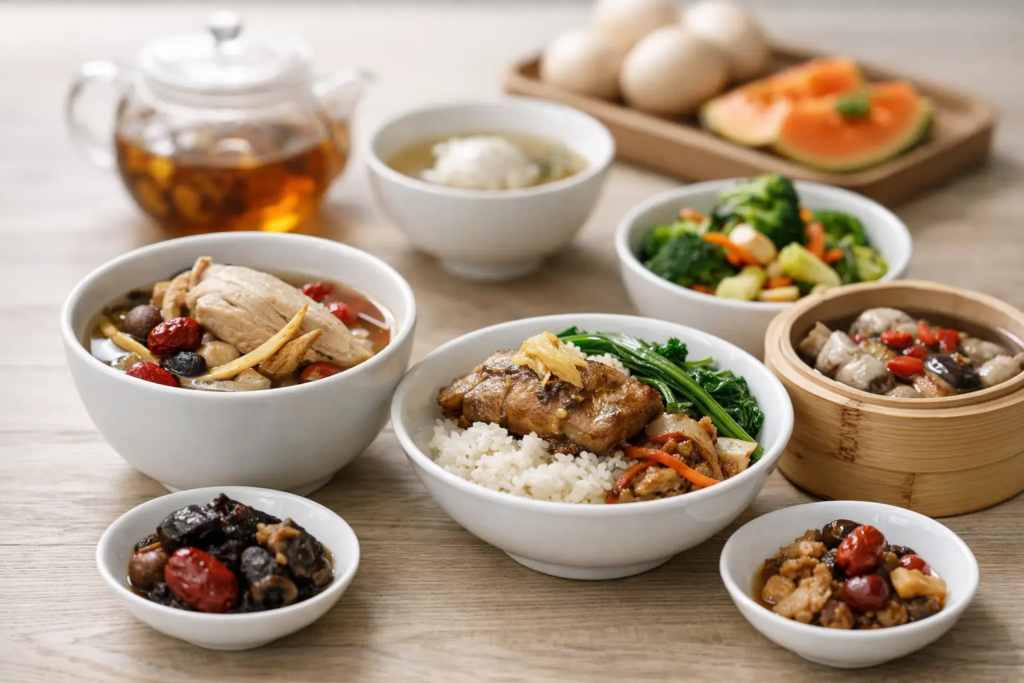
When comparing confinement food in Singapore, look beyond a sample menu’s first few dishes. Check whether there is real variety across the program. A thoughtful rotation may include Chinese-inspired recovery classics alongside Japanese, Korean, Thai, or Western-style dishes, prepared with postpartum needs in mind. This variety can make a meaningful difference over 14 or 28 days, particularly when your appetite changes from one week to the next.
Fresh preparation matters too. Meals that are prepared close to delivery and sent warm can be especially reassuring when you are resting at home with a newborn. Consider the portions as well. You need enough food to feel sustained, not a small serving that leaves you searching the kitchen for snacks an hour later.
Think Beyond the Main Dish
The best confinement meal plans consider the full rhythm of your day. Recovery often means eating at irregular times between feeds, naps, visitors, and appointments. Having a complete set of dishes can reduce the mental load of deciding what to eat when you are tired.
A balanced day may include a satisfying main meal, vegetables, a restorative soup, and nourishing drinks or desserts where appropriate. Therapeutic herbal soups, fresh fish, bird’s nest, and Thai young coconut water may also be meaningful additions for mothers who enjoy them. The right choices depend on your personal preferences, dietary needs, and the guidance you have received from your healthcare team.
If you have food allergies, dietary restrictions, or ingredients you prefer not to eat, ask early about accommodations. Clear communication before your plan begins prevents unnecessary stress during a period when you should not need to chase answers.
Consider Delivery Reliability as Part of Care
A beautiful menu is not much help if delivery is unpredictable. When choosing a confinement caterer, ask practical questions: Will meals arrive warm? Is there a reliable delivery window? How are the meals packed? What happens if you need assistance with your order?
Warm delivery is more than a convenience. It means one less task for a recovering mother or a family member who is already managing laundry, baby care, and rest. Reusable thermal tingkat sets can also make mealtimes feel organized and reduce the pile of single-use packaging at home.
Dependability is particularly valuable when you do not have full-time confinement support. A reliable meal schedule gives the household one steady point in a day that may otherwise feel unpredictable. It also helps partners and family members care for a new mother in a practical, meaningful way.
Decide on the Right Program Length
A short trial can be a sensible place to begin if you are unsure about flavors, portion sizes, or your preferred meal style. It gives you a chance to experience the food and service before committing to a longer program.
For many families, a 7-day plan offers support during the earliest, most demanding stretch. A 14-day or 28-day program may be better suited to mothers who want more consistent nourishment throughout confinement, especially if cooking support at home is limited. There is no single right length. Your delivery experience, household support, budget, and personal comfort all matter.
It is helpful to arrange your plan before your due date, while you have more time to compare menus and discuss preferences. If delivery dates need to shift because your baby arrives earlier or later than expected, choose a provider with a clear and compassionate process for helping you make adjustments.
How to Choose Confinement Food With Confidence
The most useful question is not, “Which plan is the most traditional?” It is, “Which plan will genuinely care for me when I need it?” Look for thoughtful nutritional and TCM-informed planning, fresh and appealing food, generous variety, reliable warm delivery, and a team that understands postpartum recovery is both physical and emotional.
Shan Food brings together the guidance of an experienced chef, a TCM professor, a clinical nutritionist, and lactation professionals to create meals that feel purposeful without being repetitive. Its structured 7-, 14-, and 28-day programs are designed for mothers recovering after vaginal or Caesarean birth, with modern Asian and Western flavors alongside traditional nourishment.
You have spent months caring for your baby. As you prepare for birth, give yourself permission to arrange care for yourself, too. A trial meal can be a gentle first step toward finding nourishment that lets you rest a little more, worry a little less, and focus on the moments that matter most.