
Uncategorized
Confinement Nanny vs Meal Delivery: Which Fits?
Aug
The question of confinement nanny vs meal delivery often comes up when you are still preparing for baby, or when recovery has already made the answer feel urgent. You may want traditional postpartum food, more rest, and help with the daily load – but the right kind of support depends on your home, budget, recovery, and family arrangement.
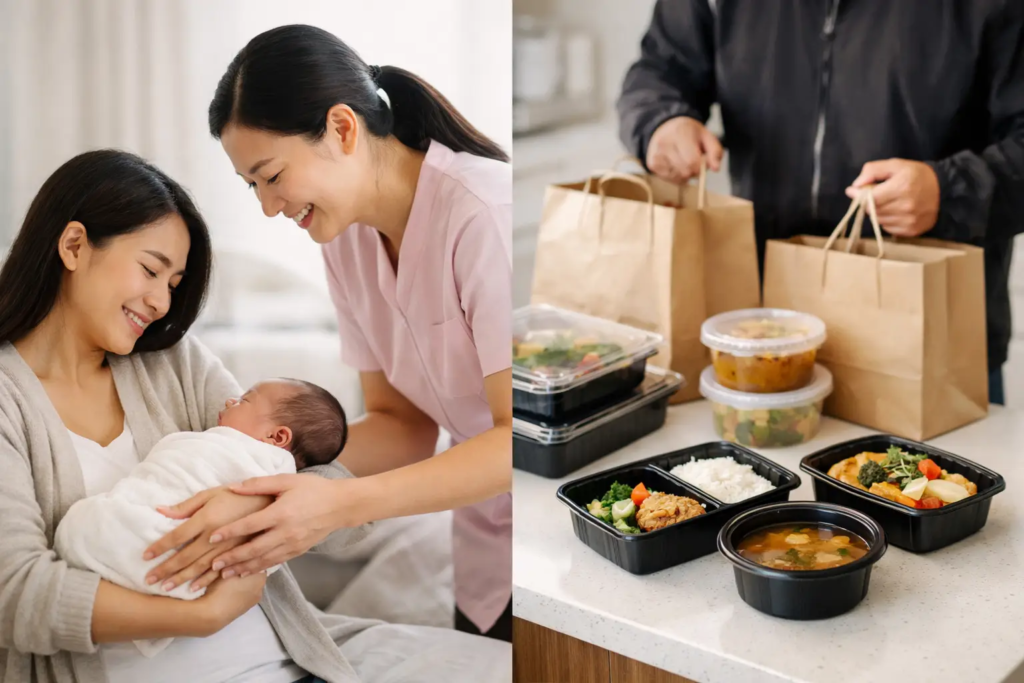
A confinement nanny and a dedicated confinement meal delivery plan can both make the early weeks more manageable. They simply solve different problems. One provides in-home, hands-on support. The other gives you dependable, thoughtfully planned nourishment without adding another person to your household.
Confinement Nanny vs Meal Delivery: The Core Difference
A confinement nanny, often known locally as a confinement lady, lives in or visits your home during the postpartum period. Her role may include preparing meals, helping with baby care, assisting with basic household tasks, and sharing practical newborn routines. The scope varies greatly, so it is worth discussing expectations in detail before booking.
Confinement meal delivery is centered on one essential part of recovery: making sure the mother has warm, suitable meals every day. A structured program removes the work of menu planning, ingredient shopping, cooking, and cleaning up after preparation. Meals arrive ready to enjoy, allowing you to rest or spend that time feeding and bonding with your baby.
Neither option is automatically better. The most supportive choice is the one that fills the gaps in your particular home.
When a Confinement Nanny May Be the Better Fit
A nanny may suit families that need substantial practical help beyond meals. This can be especially valuable for first-time parents who feel unsure about newborn bathing, settling, laundry, or establishing a daily rhythm. If your partner must return to work quickly and there is little family support nearby, having an experienced person in the home can feel reassuring.
For mothers recovering from a Caesarean birth, limited mobility can make everyday tasks feel particularly demanding. A helpful nanny may reduce the need to stand for long periods, carry items, or move repeatedly between the kitchen, bedroom, and nursery. That hands-on assistance can be meaningful in the first days.
Still, the experience depends heavily on the individual. Cooking style, hygiene practices, food preferences, baby-care beliefs, communication, and comfort with house rules all matter. A nanny is a close presence in your home at a very tender time, so a good personal fit is as important as her experience.
There is also the financial and logistical consideration. Live-in care typically requires a larger commitment, suitable sleeping arrangements, and clear discussions about duties, rest days, visitors, and family boundaries. For some households, that level of support is ideal. For others, it can create more coordination than relief.
When Meal Delivery Makes More Sense
Meal delivery is often the right choice when your main concern is eating well during confinement without having to cook. You may already have a supportive partner, parents nearby, a domestic helper, or older children whose routines need attention. In these situations, reliable food support can take one major responsibility off everyone’s plate.
It can also suit mothers who value privacy. Postpartum recovery is personal. You may prefer quiet time at home, the freedom to settle into feeding without an additional person around, and the ability to manage your household in your own way. Warm meals delivered at predictable times can provide care while preserving that space.
A good Singapore confinement food delivery service should offer more than repetitive bowls of soup. Your appetite can shift after birth, and eating the same flavors for weeks may make it harder to look forward to meals. Variety matters, particularly when you are trying to eat consistently while tired.
At Shan Food, menus are developed with guidance from an experienced chef, TCM professor, clinical nutritionist, and lactation professionals. Traditional Chinese postpartum principles are thoughtfully paired with modern Chinese, Japanese, Korean, Thai, and Western dishes, so nourishment can still feel satisfying and enjoyable. Meals are freshly prepared and delivered warm in reusable thermal tingkat sets, which means less reheating, less cleanup, and one less decision for the day.
Compare the Support You Actually Need
Before choosing, think beyond the question, “Who will cook for me?” Ask what will be hardest once baby arrives.
If you are worried about newborn care, household tasks, and being alone for long stretches, a confinement nanny may offer broader support. If you feel confident about baby care but know you will struggle to shop, prepare food, and eat on time, a meal program may be the more focused and cost-conscious answer.
Many families also choose a middle path. They may arrange a shorter nanny stay for the earliest days, then continue with a 14- or 28-day meal plan. Others rely on family for practical help while booking postpartum meals to ensure the mother’s nourishment is not left to chance. There is no single “proper” confinement setup. There is only the plan that helps you feel cared for and less overwhelmed.
Consider Food Quality, Variety, and Dietary Needs
With a nanny, meal quality depends on her recipes, sourcing, cooking habits, and willingness to adapt to your preferences. Some mothers love the familiarity of home-cooked dishes. Others find that they want more variety, lighter flavors, or meals that feel less restrictive after several days.
With a specialist meal plan, you can usually view the menu structure in advance and choose a program length that matches your needs. Look for freshly prepared meals, clear ingredient standards, and menus designed for different stages of postpartum recovery. If you are breastfeeding, it can be helpful to choose meals planned with adequate protein, vegetables, fluids, and nourishing soups in mind, without treating any single dish as a guarantee of milk supply.
TCM-informed confinement meals commonly use ingredients such as ginger, sesame oil, black vinegar, red dates, and herbal soups according to the stage of recovery and the mother’s individual needs. These traditions are meaningful to many families, but your care plan should also account for your medical advice, allergies, dietary restrictions, and comfort with particular ingredients. If you have had a complicated delivery or have ongoing health concerns, follow your doctor’s recommendations first.
Think About Cost Without Reducing Care to a Number
A nanny and meal delivery have very different cost structures. A nanny’s fee reflects her time, presence, and range of duties, while meal delivery is a dedicated investment in food and delivery. Comparing the total price alone can be misleading because the services are not equivalent.
Instead, consider what you would otherwise need to spend or manage: groceries, cooking labor, kitchen cleanup, takeout, food waste, and the stress of asking a tired partner to organize every meal. A well-planned meal program may be particularly valuable when family support is available but nobody has the capacity to cook specialized postpartum dishes daily.
A trial meal can be a sensible place to start if you are unsure about flavors, portions, or delivery timing. It gives you a clearer picture of whether the food feels like a comfort during a demanding season, rather than another thing you have to make work.
The Best Choice Is the One That Lets You Rest
Your confinement arrangement does not need to look like anyone else’s. Some mothers need a calm, capable pair of hands in the house. Others need nourishing food to arrive warm and reliably, with the freedom to recover privately in their own rhythm.
You have spent months caring for your baby. Now, let your recovery have a place in the plan too. If warm, varied postpartum meals would give you one less responsibility, consider trying a confinement meal before your delivery date and choose the program that helps you rest, eat, and bond with greater ease.