


Uncategorized
Is a Confinement Meal Trial Worth Trying?
Aug
The first days after birth are not the time to wonder what to cook, whether food will arrive on time, or if another bowl of the same soup is all you can manage. A confinement meal trial gives you a simple way to experience postpartum meal delivery before committing to a longer plan – so you can decide what truly feels supportive during recovery.
For many mothers in Singapore, a trial is about more than tasting a dish. It is a chance to see whether the food arrives warm, whether the portions feel satisfying, and whether the flavors make you look forward to your next meal. You have spent months caring for your baby. Now, let us care for your nourishment while you rest, heal, and bond.
Why a Confinement Meal Trial Matters
Confinement food is often associated with familiar restorative ingredients, warming soups, ginger, sesame oil, black vinegar, and carefully selected proteins. These traditions are meaningful, but your meals should also be enjoyable enough to eat day after day. Postpartum recovery asks a great deal of your body, especially when you are managing interrupted sleep, feeding schedules, visitors, and the emotional adjustment of welcoming a baby.
A trial meal helps take the guesswork out of choosing a confinement caterer. Rather than relying only on menu descriptions, you can experience the details that shape your everyday comfort: freshness, seasoning, texture, packaging, portion size, and delivery timing.
This can be especially reassuring for first-time mothers who are unsure what confinement meals will be like. It is equally useful for experienced mothers who know that variety and quality can make a meaningful difference when meals become part of the rhythm of each recovery day.
What to Look for During Your Trial Meal
A good trial should help you answer a practical question: can I happily rely on these meals when I am tired and need care the most? There is no single right answer, because every mother has different preferences, dietary needs, and recovery circumstances. Still, a few details are worth noticing.
Food that feels nourishing, not repetitive
Traditional postpartum nourishment does not have to mean eating the same flavors repeatedly. A well-planned menu can draw on TCM-informed principles while bringing welcome variety through modern Chinese, Japanese, Korean, Thai, and Western-inspired dishes.
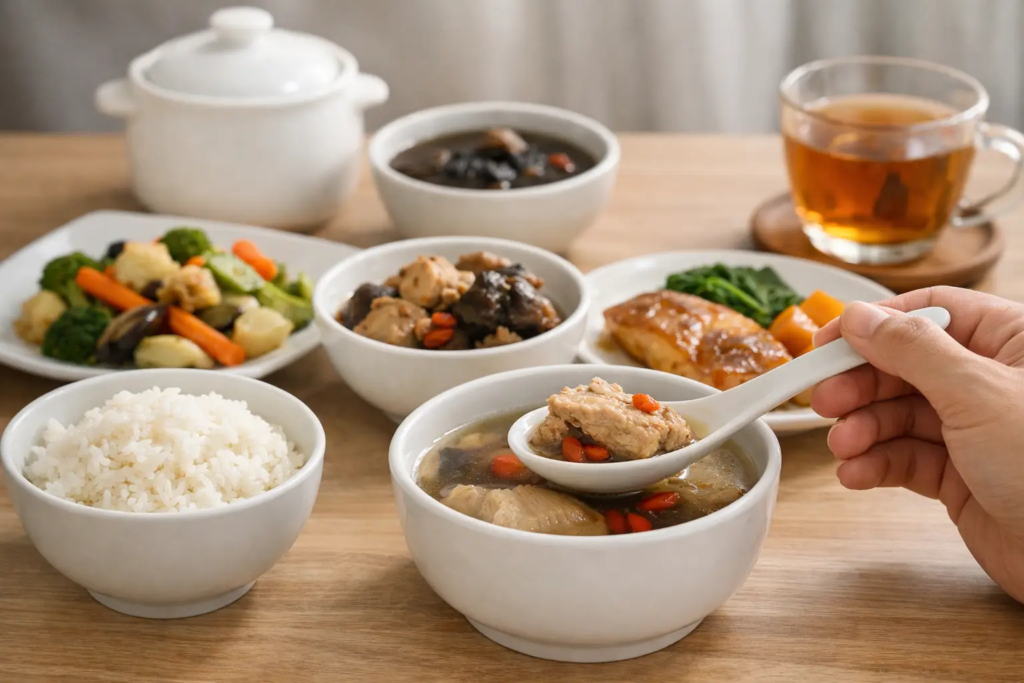
Pay attention to whether the meal feels balanced. You may receive a warming soup, a protein-rich main, vegetables, and nourishing staples that come together as a complete meal rather than a collection of heavy dishes. The goal is not to make every bite taste medicinal. It is to offer thoughtful food that is comforting, satisfying, and suited to the confinement period.
If you are breastfeeding, you may also appreciate meals designed with your overall nourishment in mind. A varied, adequate diet and regular meals can be easier to maintain when someone else has already planned and prepared them for you. Individual needs vary, so it is always sensible to speak with your healthcare professional about personal dietary concerns, allergies, or medical conditions.
Warm delivery when you are ready to eat
The difference between a meal that is technically delivered and one that is genuinely helpful often comes down to timing and temperature. In the early postpartum weeks, reheating containers, washing extra pots, and coordinating meals with a newborn’s unpredictable routine can feel like another task on an already full list.
Look for meals delivered warm and packed securely. Reusable thermal tingkat sets can keep different dishes organized while reducing the pile of disposable containers around your home. A dependable delivery routine also gives family members peace of mind, especially when they are arranging support but cannot be there for every meal.
Portions that support real recovery days
After childbirth, appetite can change from day to day. Some mothers are hungry more often, while others prefer smaller, gentler meals at first. Your trial is an opportunity to assess whether the portions feel generous and balanced for you, not simply whether the food looks appealing in a photo.
Consider how you feel after eating. Are you comfortably full? Does the meal include enough variety to keep you interested? Would you be glad to receive a similar standard of food for several weeks? A trial cannot predict every meal in a 7-, 14-, or 28-day confinement program, but it can show you the kitchen’s approach to quality and care.
Ingredients and expertise you can trust
Postpartum menus are often shaped by a blend of cultural wisdom and current nutritional understanding. TCM-informed confinement food may emphasize warming preparations and ingredients traditionally selected to support the mother through the postpartum period. Modern nutrition adds another useful lens, helping ensure meals include a considered balance of protein, vegetables, carbohydrates, and fluids.
Ask who develops the menu and how dietary preferences are handled. At Shan Food, menus are guided by a chef with 30 years of experience, a TCM professor, a clinical nutritionist, and lactation professionals. This collaborative approach recognizes that a mother’s recovery meals should be both purposeful and pleasant to eat.
How to Make the Most of a Trial
Try your confinement meal at a realistic time. If possible, eat it when you would normally need lunch or dinner after baby arrives, rather than tasting it casually between other meals. This makes it easier to judge whether the meal offers the convenience and comfort you need.
If your partner, parent, or another family member is helping to arrange confinement care, invite them to take note of the delivery experience too. They may be the person receiving the meal at the door, managing household routines, or helping you compare options. A trial can turn an abstract decision into something everyone understands.
It also helps to think beyond the first dish. Look at the menu range and ask whether it reflects your tastes. Some mothers want familiar Chinese confinement classics throughout their program. Others feel more encouraged by the thought of alternating traditional soups with lighter, contemporary dishes. Neither preference is wrong. The best plan is the one you can enjoy consistently while giving yourself permission to rest.
If you have had a Caesarean birth, anticipate a more limited routine in the first days at home. Food that arrives warm and requires no preparation may feel especially valuable. If you have had a vaginal birth and expect more family support, you may still value a structured meal plan because it removes daily decisions and helps your household stay focused on your recovery.
From One Trial Meal to Ongoing Care
A trial is not a test you need to pass. It is a chance to choose with confidence. Notice whether the meal makes you feel looked after, whether the food is appealing, and whether the service would lighten the load for your family during confinement.
When you find a provider whose meals fit your needs, a longer program can offer something valuable beyond convenience: consistency. You do not need to plan groceries, stand over the stove, or ask loved ones what is for dinner when you are trying to sleep whenever your baby allows. Your nourishment is already on its way.
You may also want to explore supportive additions such as therapeutic herbal soups, fresh fish, bird’s nest, or Thai young coconut water, depending on your preferences and the advice you have received. These touches can make a meal plan feel more personal, but the foundation remains the same: fresh, comforting meals delivered reliably.
Order a confinement meal trial when you are ready to see what dependable postpartum nourishment can feel like. One warm meal can offer a small but meaningful reminder that caring for yourself is not an extra task – it is part of caring for your new family.