


Uncategorized
Helpful Foods to Eat After C-Section Delivery
Aug
A C-section is major abdominal surgery, and the first days at home can make even a simple snack feel like a big task. Choosing the right foods to eat after C-section delivery can help you meet your higher needs for energy, protein, fluids, and key nutrients while you heal, feed your baby, and adjust to a new rhythm.
There is no single perfect confinement diet. Your appetite, blood loss, medications, breastfeeding plans, cultural preferences, and any medical conditions all matter. The most helpful approach is regular, warm, balanced meals that are easy to digest and easy to enjoy – without placing one more job on your shoulders.
Start with warm, balanced meals after a C-section
After surgery, many mothers find warm meals gentler and more comforting than cold, raw, or heavily processed foods. In Traditional Chinese Medicine-informed confinement care, warming dishes are commonly chosen to support rest and replenish the body after childbirth. Modern nutrition supports the practical side of this approach too: soups, porridges, braises, and steamed dishes can be easier to eat when you are tired, sore, or not especially hungry.
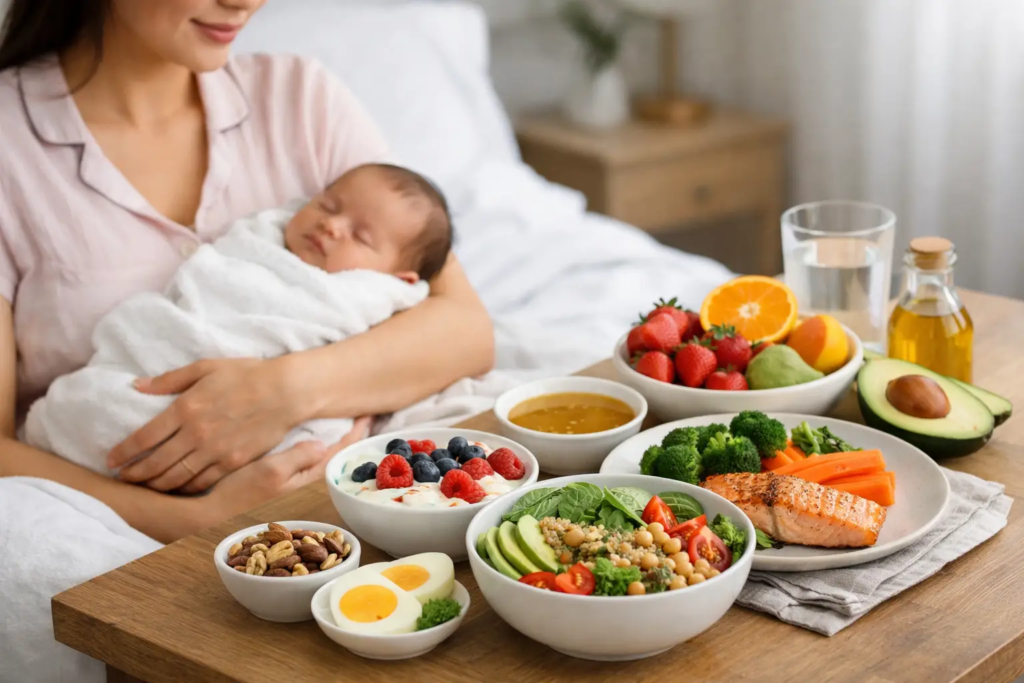
Aim for a simple balance at most meals: a protein-rich main, cooked vegetables, a nourishing carbohydrate, and a source of healthy fat. This combination supports steady energy and provides the building blocks your body uses during recovery.
Do not feel pressured to eat large portions at once. Smaller meals and snacks every few hours may be more comfortable, especially if pain medication, constipation, or a reduced appetite is affecting you.
Prioritize protein for tissue repair
Protein is one of the most valuable nutrients after a Caesarean birth because your body needs it to repair the incision and recover from surgery. Include a protein source at every meal where possible.
Tender fish, chicken, eggs, tofu, lean pork, beans, lentils, and Greek yogurt are all useful choices. Fish can be particularly appealing in postpartum meals because it is soft, flavorful, and quick to digest. Choose a variety of low-mercury options, such as salmon, sardines, tilapia, or pomfret, and follow your clinician’s guidance if you have questions about seafood during breastfeeding.
A bowl of fish soup with rice, steamed egg with minced chicken, or braised tofu with vegetables can provide protein without feeling too heavy. If a full meal is difficult, an egg, a cup of milk, or a small bowl of bean soup can help bridge the gap.
Choose iron-rich foods to replace what you lost
Blood loss during delivery can leave some mothers with low iron levels, which may contribute to fatigue, dizziness, weakness, or shortness of breath. Your doctor may recommend an iron supplement, particularly if your blood count is low. Food still plays a meaningful supporting role.
Iron-rich foods include lean red meat, chicken thigh, eggs, fish, tofu, legumes, dark leafy greens, and iron-fortified cereals. Pair plant-based iron sources, such as spinach or beans, with vitamin C-rich foods like oranges, kiwi, guava, tomatoes, or bell peppers. Vitamin C helps your body absorb non-heme iron, the type found in plants.
Tea and coffee can reduce iron absorption when taken with meals. You do not necessarily need to give them up, but it can help to enjoy them between meals rather than alongside your most iron-focused dishes.
Eat fiber and drink enough to ease constipation
Constipation is extremely common after a C-section. Surgery, pain relief medication, reduced movement, iron supplements, and fear of straining can all contribute. The answer is usually not a harsh cleanse or restrictive diet. It is consistent fluids, gradual fiber, and gentle movement when your medical team says it is safe.
Choose fiber-rich foods such as oats, brown rice, sweet potatoes, pears, prunes, papaya, cooked leafy greens, beans, and whole-grain bread. Cooked fruits and vegetables may feel more comfortable than large raw salads in the early days.
Increase fiber gradually and drink water throughout the day. Adding too much fiber without enough fluid can worsen bloating or constipation. Warm water, clear soups, and unsweetened beverages all count toward hydration. If you are breastfeeding, keep a drink within reach during feeds, since thirst can arrive quickly.
If you have severe abdominal pain, vomiting, cannot pass gas, or have persistent constipation despite these measures, contact your healthcare provider promptly.
Include carbohydrates that give you lasting energy
New motherhood calls for energy at unpredictable hours. Carbohydrates are not something to avoid during recovery. They help fuel daily activity, support your overall calorie needs, and can make a meal feel satisfying.
Choose nourishing carbohydrates more often: rice, oats, whole-grain noodles, potatoes, sweet potatoes, corn, quinoa, and whole-grain toast. White rice or congee can also be a practical choice when your appetite is low or your stomach feels unsettled. The goal is not perfection. Pairing carbohydrates with protein, vegetables, and fats can help you feel full and steady for longer.
A warm bowl of chicken congee with greens, rice with steamed fish and ginger, or soba noodles in a nourishing soup are all sensible recovery meals. Variety matters too. Eating well for several weeks is easier when every meal does not taste the same.
Foods to eat after C-section delivery for key nutrients
Alongside protein, iron, fiber, and carbohydrates, a few nutrients deserve special attention in your postpartum meals.
Calcium supports bone health, while vitamin D helps your body use calcium. Milk, yogurt, cheese, calcium-set tofu, fortified soy milk, and small fish with edible bones can contribute. Omega-3 fats, found in salmon, sardines, walnuts, chia seeds, and flaxseed, are another beneficial part of a balanced diet.
Colorful cooked vegetables and fruit provide vitamin C, folate, potassium, and antioxidants. Think of them as everyday support rather than a cure-all. Broccoli, bok choy, carrots, tomatoes, mushrooms, berries, citrus, and papaya are easy ways to add color and nutrients to your plate.
TCM-inspired ingredients such as ginger, red dates, black sesame, goji berries, and herbal soups are also commonly included in confinement meals. They can be a comforting part of your food traditions, but herbs are not automatically suitable for every mother. If you have high blood pressure, diabetes, allergies, are taking medication, or have been advised to follow a specific diet, ask your doctor or a qualified practitioner before taking concentrated herbal preparations.
What to limit while you recover
You do not need a long list of forbidden foods after a C-section. However, very greasy, spicy, or heavily processed meals may aggravate nausea, heartburn, bloating, or constipation for some mothers. If you notice a particular food makes you uncomfortable, set it aside temporarily and try it again later.
Keep alcohol off the menu while you are recovering, especially if you are using opioid pain medicine. If you breastfeed and are considering alcohol later, speak with your healthcare provider about timing and safety. Also be mindful of caffeine. A modest amount may fit into many breastfeeding routines, but too much can affect your sleep and may make some babies more unsettled.
Most importantly, avoid restrictive postpartum diets. Healing from surgery and producing milk, if you are breastfeeding, both require adequate nourishment. Weight-loss pressure can wait. Your body deserves consistent care first.
Make nourishing meals easier to keep up with
The best recovery food is food you can actually eat regularly. That may mean accepting a family member’s help, stocking the freezer before delivery, or arranging prepared postpartum meals for the first few weeks. This is not an indulgence. It is practical support at a time when standing, chopping, shopping, and washing dishes may be difficult.
For mothers in Singapore, Shan Food prepares warm, TCM-informed confinement meals with guidance from an experienced chef, TCM professor, clinical nutritionist, and lactation professionals. Its menus combine familiar recovery ingredients with Chinese, Japanese, Korean, Thai, and Western dishes, so nourishment can remain enjoyable across the days of confinement.
If you are planning ahead, begin with a trial meal to find the flavors and portions that feel right for you. You have spent months caring for your baby. Let your meals be one dependable way that someone cares for you, too.