
Uncategorized
TCM Postpartum Food Principles for Recovery
Aug
After birth, even deciding what to eat can feel like one more demand on an already exhausted body and mind. TCM postpartum food principles offer a gentle framework for this season: choose warm, nourishing meals that support rest, replenish what was lost during childbirth, and feel comforting enough to eat consistently while you care for your baby.
These traditions are not about surviving on one repetitive dish or following strict food rules out of fear. At their best, they bring intention to everyday meals, with room for personal preferences, modern nutritional needs, breastfeeding, and the realities of recovery after either a vaginal or Caesarean birth.
TCM Postpartum Food Principles, Explained Simply
In Traditional Chinese Medicine, the weeks after delivery are often viewed as a time when the body needs to rebuild warmth, blood, energy, and fluids. Pregnancy and birth ask a great deal of a mother. Postpartum food is therefore traditionally prepared to be warming, easy to digest, and rich in ingredients that are thought to support restoration.
You may hear this referred to as “warming the body” during confinement. In practical terms, this often means favoring cooked food over cold raw meals, warm soups over iced drinks, and gentle cooking methods such as steaming, braising, and simmering. A bowl of fish soup with ginger, sesame oil chicken with rice, or slow-cooked pork and black bean soup can feel far more manageable than a cold salad when your appetite is uneven and sleep is scarce.
TCM concepts are one part of postpartum care, not a replacement for medical advice. Your obstetrician, midwife, or other healthcare professional should guide concerns such as heavy bleeding, fever, wound problems, severe pain, low mood, allergies, diabetes, high blood pressure, or medication interactions. Thoughtful food can support your recovery routine, but it should never delay needed care.
Start With Warmth and Digestibility
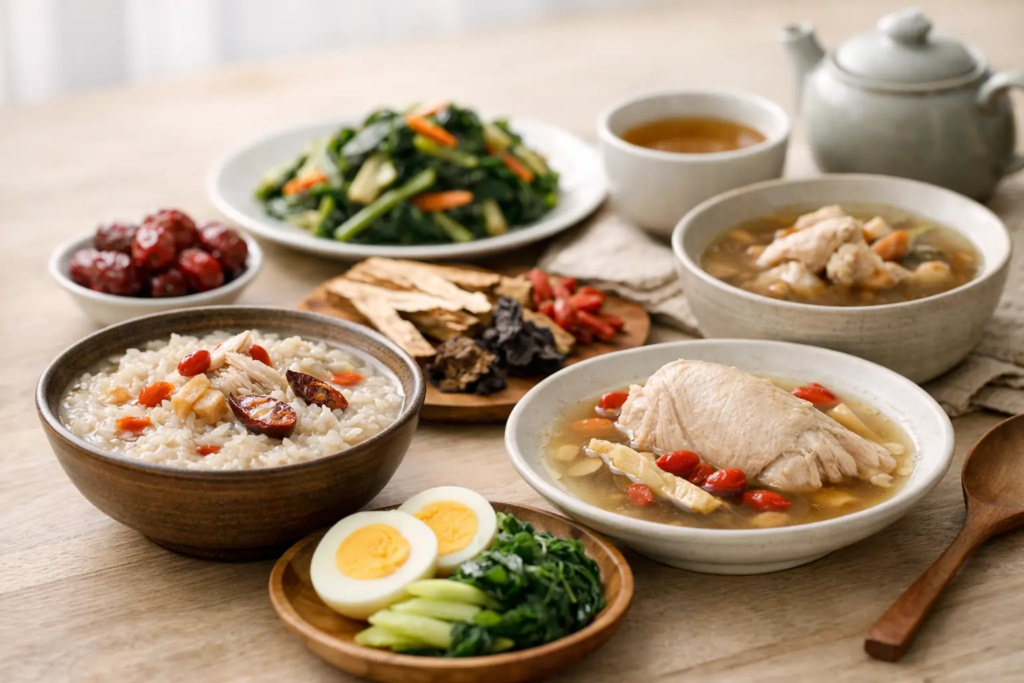
A common principle is to choose food that feels gentle on the stomach. After labor, surgery, pain medication, and disrupted sleep, digestion may not feel quite like itself. Warm congee, steamed fish, soft-cooked vegetables, rice, noodles, eggs, and slow-simmered soups are often easier to enjoy than heavily fried, greasy, or very spicy meals.
This does not mean every meal has to be bland. Ginger, sesame oil, scallions, red dates, goji berries, herbs, and aromatic broths bring flavor and character while keeping the meal comforting. Variety matters, too. A mother is more likely to eat well across several weeks when her menu includes familiar Chinese dishes alongside Japanese-inspired fish meals, Korean-style soups, Thai flavors, or lighter Western options prepared with recovery in mind.
For some mothers, especially in Singapore’s warm climate, the idea of eating only intensely warming foods may feel unappealing. Listen to your appetite and comfort. Warm meals do not have to be heavy meals. Clear fish soup, steamed chicken with ginger, or a nourishing vegetable broth can provide a lighter option while still fitting the overall approach.
Replenish With Protein, Iron, and Everyday Nutrients
Traditional confinement meals often center on ingredients associated with rebuilding after blood loss, including lean meat, liver in moderation, eggs, fish, dark leafy vegetables, black sesame, red dates, and legumes. Modern nutrition adds helpful context: postpartum mothers need adequate energy, protein, iron, fiber, calcium, and fluids, especially when breastfeeding.
Protein deserves a place at every main meal because it supports normal tissue repair and helps meals feel satisfying. Fish, chicken, pork, tofu, eggs, beans, and lentils can all contribute. If you had a Caesarean birth, regular, balanced meals may be especially useful when your body is recovering from surgery, but your medical team’s specific instructions always come first.
Iron-rich foods can be valuable after delivery, particularly if you experienced significant blood loss or were already low in iron during pregnancy. Meat, fish, eggs, tofu, legumes, and leafy greens are useful food sources. Some mothers may also need an iron supplement, but that is a conversation for a healthcare professional, as needs vary and supplements can cause side effects for some people.
Rather than trying to find one miraculous confinement ingredient, aim for a pattern of nourishing meals. A well-planned lunch of steamed fish, brown or white rice, cooked greens, and herbal soup can be just as purposeful as a more traditional dish. The best meal is often the one that is warm, balanced, and actually eaten.
Use Soups as a Practical Recovery Ritual
Soup has a special place in postpartum nourishment for good reason. It is warm, hydrating, easy to serve, and can carry protein, vegetables, and traditional ingredients in one comforting bowl. On days when you are feeding a baby around the clock, a ready-to-eat soup may be the difference between having a proper meal and missing one entirely.
Different soups are often selected for different stages and needs. Ginger fish soup is a familiar choice for mothers who want a light, warming meal. Black bean or peanut soups can offer a heartier option. Chicken soups with red dates or other traditional herbs are often included for their comforting, restorative character. For breastfeeding mothers, a lactation professional can help separate practical feeding support from the many food claims that circulate online. Hydration, frequent milk removal, adequate calories, and individualized help remain central.
Be mindful of herbal soups and tonics. “Natural” does not automatically mean suitable for everyone. The right herbs, portions, and timing can depend on your health history, medications, delivery experience, and whether you are breastfeeding. A professionally planned menu is reassuring because it takes the guesswork out of choosing ingredients that are appropriate for postpartum meals.
Avoid Extremes, Not Enjoyment
Confinement advice can sometimes make mothers anxious about a long list of forbidden foods. Some families avoid cold drinks, raw foods, shellfish, certain vegetables, or particular fruits. These practices may carry personal and cultural meaning, and you may choose to follow them. Still, overly restrictive eating can make it harder to get enough nourishment and can take pleasure out of a time when you need care.
A more sustainable approach is to reduce foods that leave you feeling uncomfortable rather than banning everything automatically. Very greasy takeaway meals may be hard on digestion. Excessively salty foods may leave you thirsty. Too much caffeine can affect sleep and may not suit every breastfeeding mother. Alcohol should be avoided while breastfeeding unless you have received individualized guidance on timing and safety.
Food safety matters as much as food tradition. Choose freshly prepared meals, eat cooked food while it is properly hot, and store leftovers safely. If you have gestational diabetes, allergies, high blood pressure, kidney concerns, or dietary restrictions, your meal plan should be adjusted accordingly. Recovery is personal, and a good confinement menu should make room for that.
Make Nourishment Easier Than Another Chore
The most thoughtful postpartum meal plan is one that works on a difficult Tuesday afternoon, not just on paper. It should arrive when you need it, include enough variety to keep meals appealing, and save your household from shopping, chopping, cooking, and washing up while you are healing.
That is why structured 7-, 14-, and 28-day confinement meal programs can be so helpful. They provide rhythm when days and nights have blurred together. Warm meals in reusable thermal tingkat sets can give a mother a dependable moment to sit down, eat, and receive care, even if that moment lasts only ten minutes.
At Shan Food, menus are developed with input from an experienced chef, a TCM professor, a clinical nutritionist, and lactation professionals. The result is not a one-note confinement menu, but freshly prepared, TCM-informed meals that bring together traditional nourishment and enjoyable flavors from Chinese, Japanese, Korean, Thai, and Western cooking.
You have spent months caring for your baby. Let your meals carry some of the care back to you. If you are planning ahead for confinement or supporting a new mother, a trial meal can be a simple, reassuring way to find the nourishment and variety that feel right for her recovery.